For more room to read and navigate, open the full-screen timeline in its own tab.
Events
Every event on the timeline above, in chronological order.
-
Progenitor of Clan Dougal Ciar
Dubhgall Ciar b.~1458
-
1st chieftain
Donnchadh MacDubhgall Ciar, 1st chieftain of Glengyle. Born about 1475.
Note that period of chieftainship is estimated.
Adapted from badges by Celtus, via Wikimedia, CC BY-SA 3.0.
-
Reformation
Scotland's Reformation, formally enacted by Parliament in 1560, replaced the Catholic Church with a Protestant Kirk. The change took hold quickly in the Lowlands but reached the Highlands slowly and unevenly: chiefs set the religious tone for their clans, and many remote Gaelic-speaking glens kept Catholic loyalties for generations. The MacGregors are conventionally counted among them, and that thread runs forward through the proscription - which left the outlawed name cut off from sacraments as well as from land - and on into the clan's later Jacobite alignment.
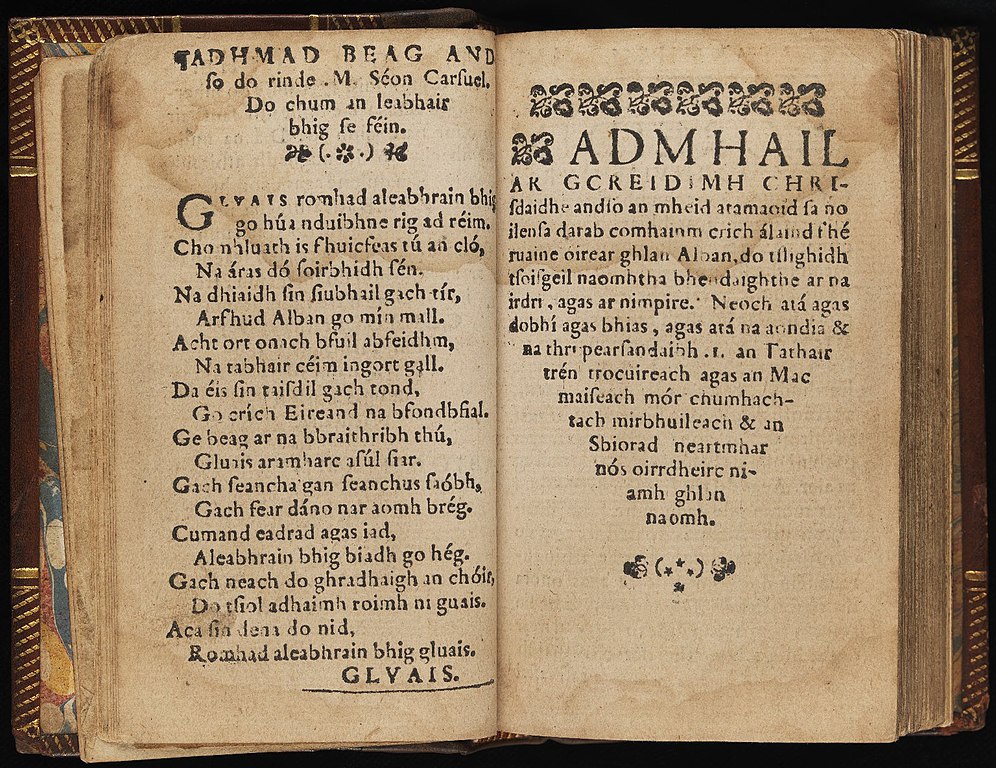
Frontispiece of the 1567 Scots Gaelic translation of John Knox's Book of Common Order. University of Edinburgh Heritage Collection, CC BY 3.0.
-
Clan Campbell-Clan Gregor feud
The Campbell-MacGregor feud, running through the second half of the sixteenth century, was a long contest over land and power in Argyll and Perthshire. Clan Campbell had the backing of the Scottish crown and steadily encroached on MacGregor territory; the MacGregors answered with raids and resistance, and the cycle of reprisal hardened into open feud. It reached its climax with the MacGregor victory at Glen Fruin in February 1603, and ended weeks later with the proscription of the MacGregor name.
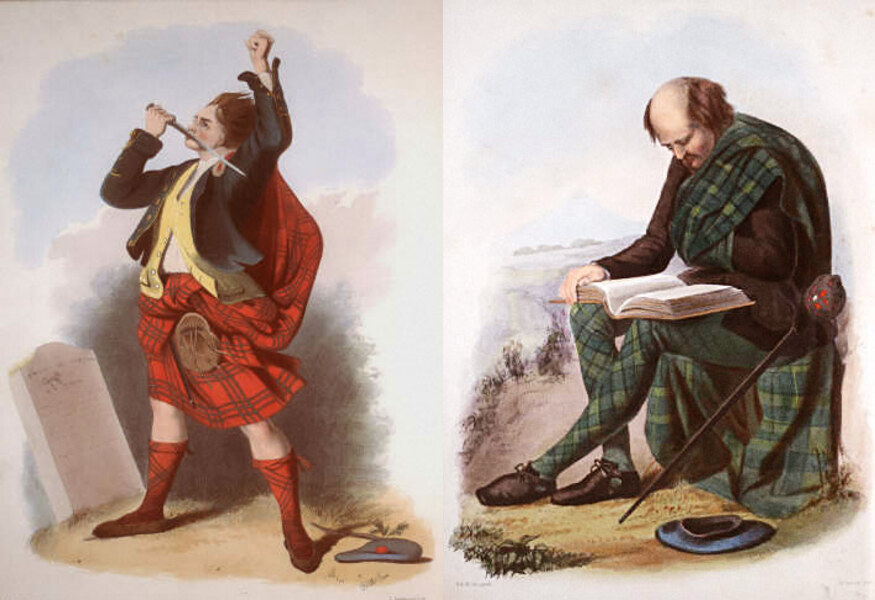
MacGregor (left) and Campbell of Argyll (right). Plates by R. R. McIan from James Logan's The Clans of the Scottish Highlands (1845-47). Public domain.
-
2nd chieftain
Maol-coluim MacDonnchadh, 2nd chieftain of Glengyle. Born after 1510 & died before 1586.
Note that period of chieftainship is estimated.
Adapted from badges by Celtus, via Wikimedia, CC BY-SA 3.0.
-
James VI of Scotland's lifetime
James VI ruled Scotland from 1567, and from 1603 also England and Ireland. He appears on this timeline for one reason: in April 1603, weeks after the MacGregor victory at the Battle of Glen Fruin, he signed the edict that outlawed the very name “MacGregor”. Anyone bearing it faced execution or forced renaming. The proscription shaped how the chiefs of Glengyle who follow on this timeline lived, fought, signed their names, and held their land for the next 170 years.
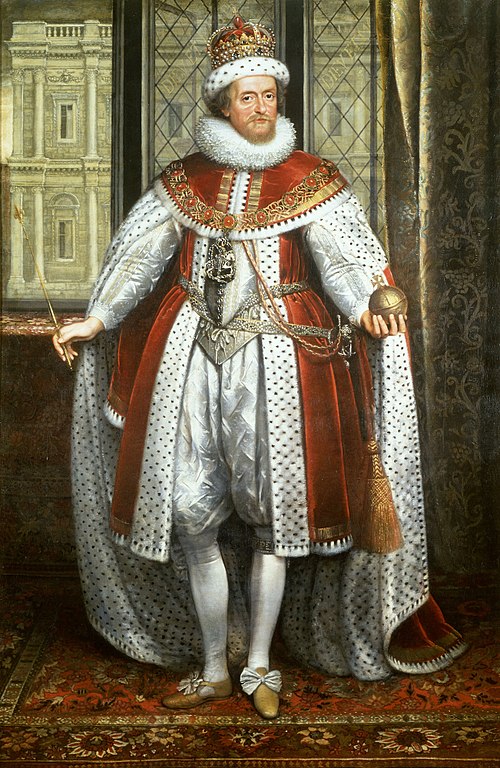
Paul van Somer, James VI and I (c.1620). Royal Collection (RCIN 404446), public domain.
-
3rd chieftain
Griogair MacGregor, 3rd chieftain of Glengyle. Born about 1542.
Note that period of chieftainship is estimated.
Adapted from badges by Celtus, via Wikimedia, CC BY-SA 3.0.
-
East India Company
The East India Company was chartered by Elizabeth I on the 31st of December 1600 and grew over the next two centuries from a London trading venture into the de facto government of much of the Indian subcontinent, with its own armies and revenue powers. After the rebellion of 1857 the Crown took direct control under the Government of India Act 1858; the company itself was wound up by the East India Stock Dividend Redemption Act 1873 and ceased to exist on the 1st of June 1874.
See East India Company on Wikipedia.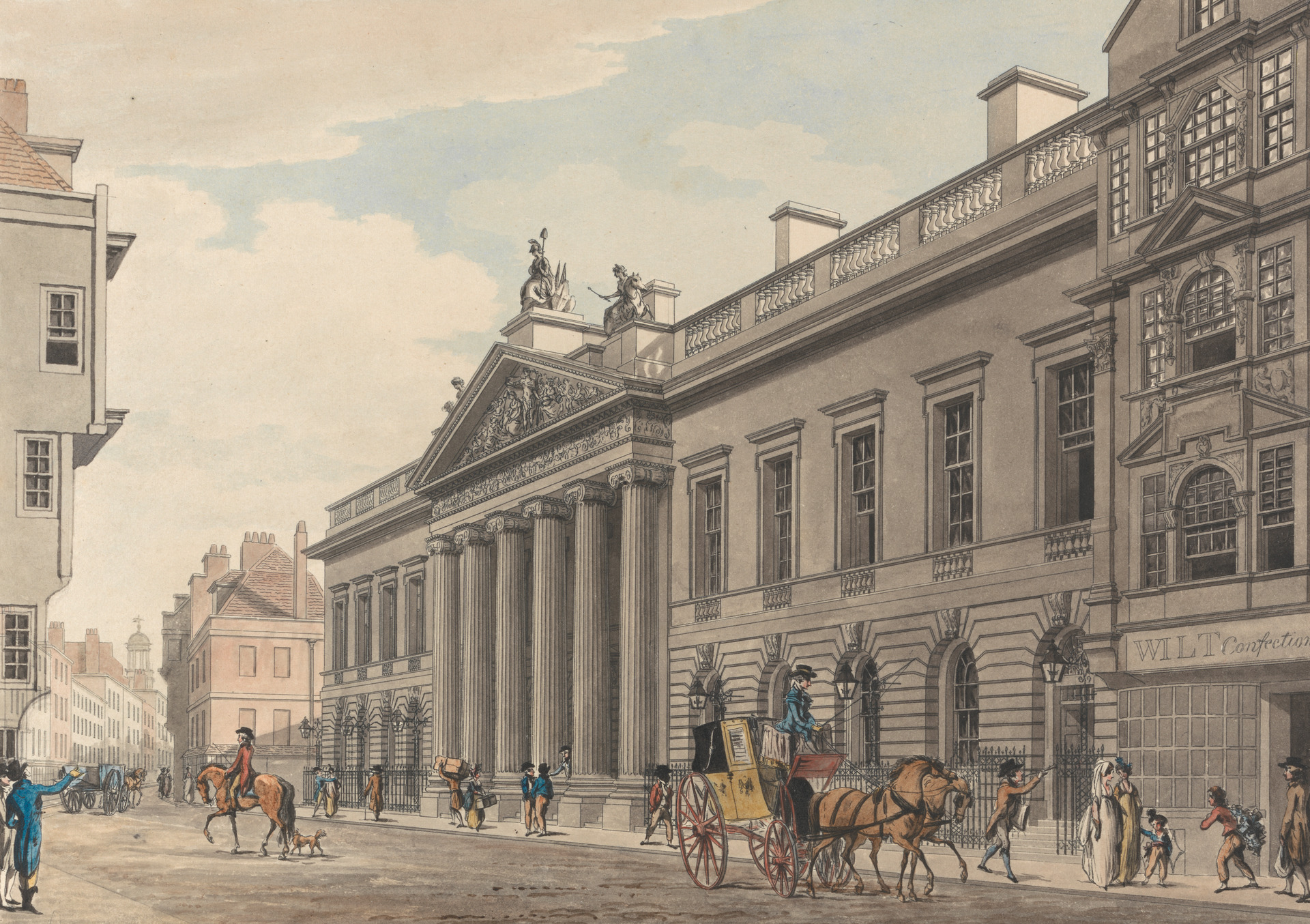
Thomas Malton the Younger, East India House (watercolour over etched outline, c. 1800). Yale Center for British Art, Paul Mellon Collection, public domain.
-
Battle of Glen Fruin
On 7 February 1603, Clan Gregor under Alasdair MacGregor of Glenstrae met a Colquhoun force at Glen Fruin, in the hills west of Loch Lomond. The Colquhouns had royal letters of fire and sword and a numerical advantage - around 800 men against the MacGregors' 400. The MacGregors took the high ground, trapped the Colquhoun foot in boggy ground as they came up out of Auchengaich Glen, and killed somewhere between 140 and 200 of them at light cost to themselves. The victory was the trigger for the proscription of the MacGregor name two months later; Alasdair of Glenstrae and eleven of his chieftains were hanged at Edinburgh's Mercat Cross in January 1604.
See also Glen Discovery's accounts of the Battle of Glen Fruin and Glen Fruin.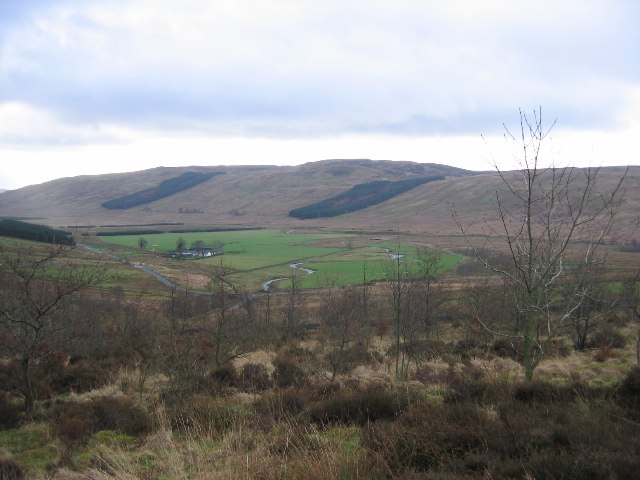
Richard Webb / Glen Fruin / CC BY-SA 2.0
-
Union of the Crowns
On the death of Queen Elizabeth I on 24 March 1603, James VI of Scotland ascends to the English throne as James I, uniting the crowns of Scotland and England.
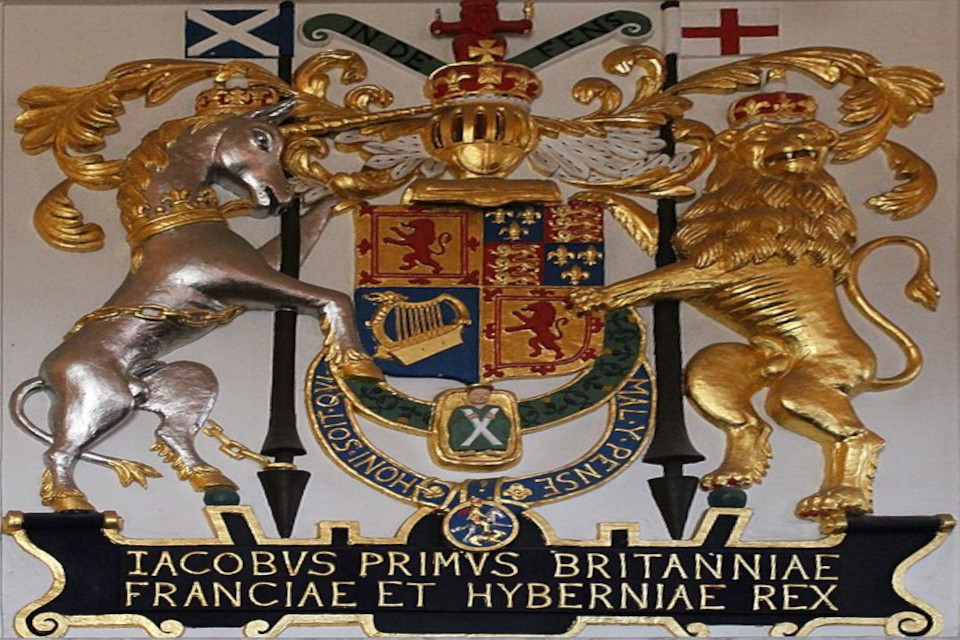
The arms of James VI of Scotland after he inherited the crowns of England and Ireland. Adapted from photo by Connie Ma (CC BY-SA 2.0)
-
Proscription of Clan Gregor
The April 1603 edict made it a capital offence to bear the name MacGregor. A 1633 statute under Charles I escalated the persecution: ministers were forbidden to baptise MacGregor children, and notaries to subscribe MacGregor bonds.
Charles II repealed the proscription in 1661 in recognition of the clan's service in the Civil War, William of Orange reimposed it in 1693, and Parliament finally lifted it in 1774 at the petition of Sir John MacGregor Murray. Through the long second period MacGregor families lived under aliases - Graham, Campbell, Murray, Drummond, Stewart - and the 1703 feu charter for Glengyle, taken from the Marquis of Montrose, was made out in the alias ‘James Graham’.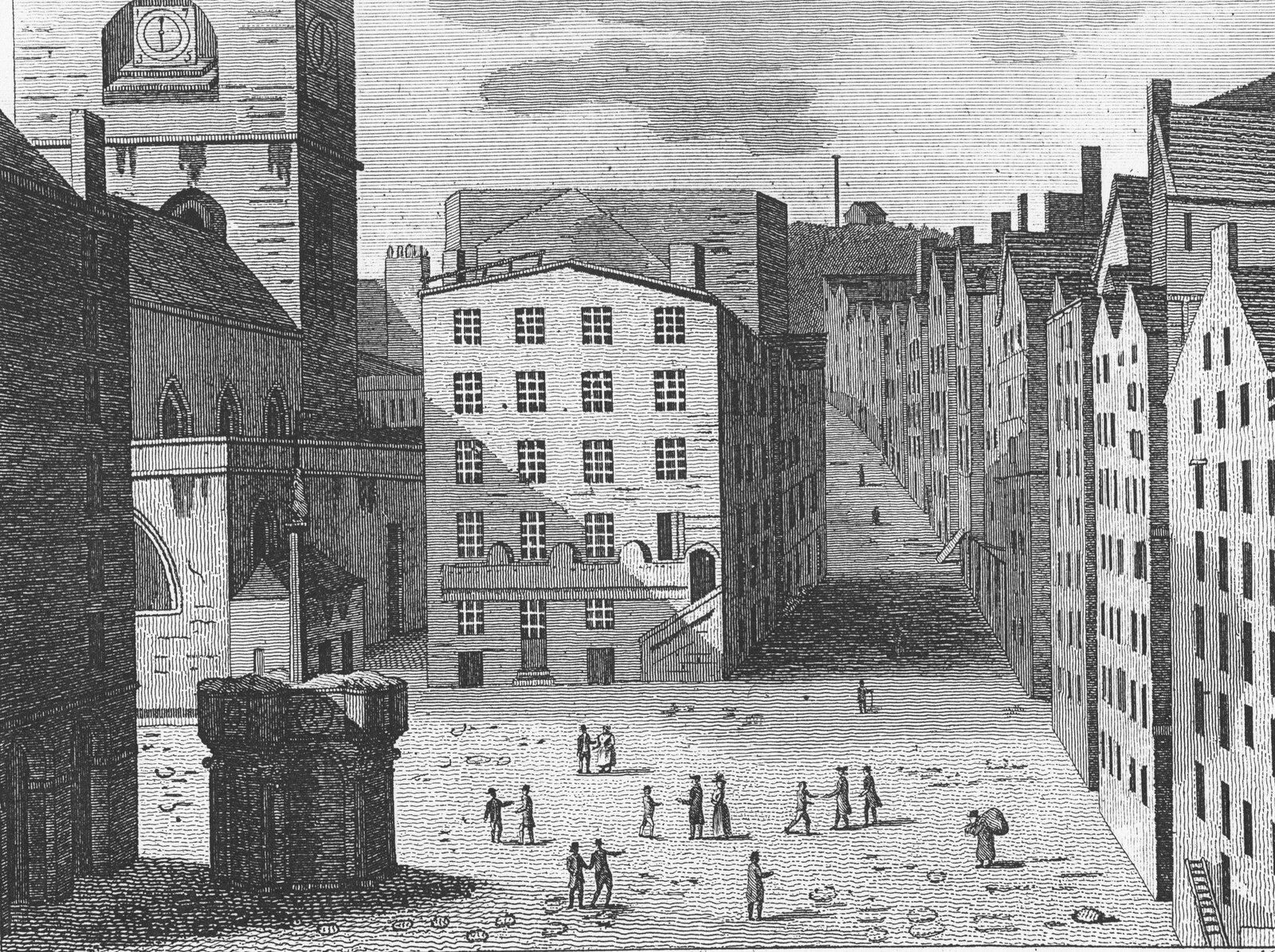
The Mercat Cross of Edinburgh, where royal proclamations including the proscription of the MacGregor name were read aloud, and where Alasdair MacGregor of Glenstrae and his chieftains were hanged in January 1604. Engraving by S. Hooper, 1791. Public domain.
-
4th chieftain
Malcolm MacGregor, 4th chieftain of Glengyle. Born after 1575 & died after 1624.
Note that period of chieftainship is estimated.
Adapted from badges by Celtus, via Wikimedia, CC BY-SA 3.0.
-
Covenanter movement
The Covenanter movement defended a Presbyterian Kirk against Charles I's attempts to impose Anglican worship on Scotland, through the National Covenant of 1638 and the Solemn League and Covenant of 1643. The MacGregors fought on the other side. In 1644 the clan chief Patrick MacGregor raised the name for the royalist Marquis of Montrose, on Montrose's written promise that victory would restore the lands and name the crown had taken from them.
MacGregor men fought at Inverlochy in February 1645 and Kilsyth that August. Montrose was routed at Philiphaugh in September and went into exile, and in August 1649 the Covenanter parliament named some 147 MacGregors enemies of the kingdom for their part in the rising. The promised restoration came to nothing.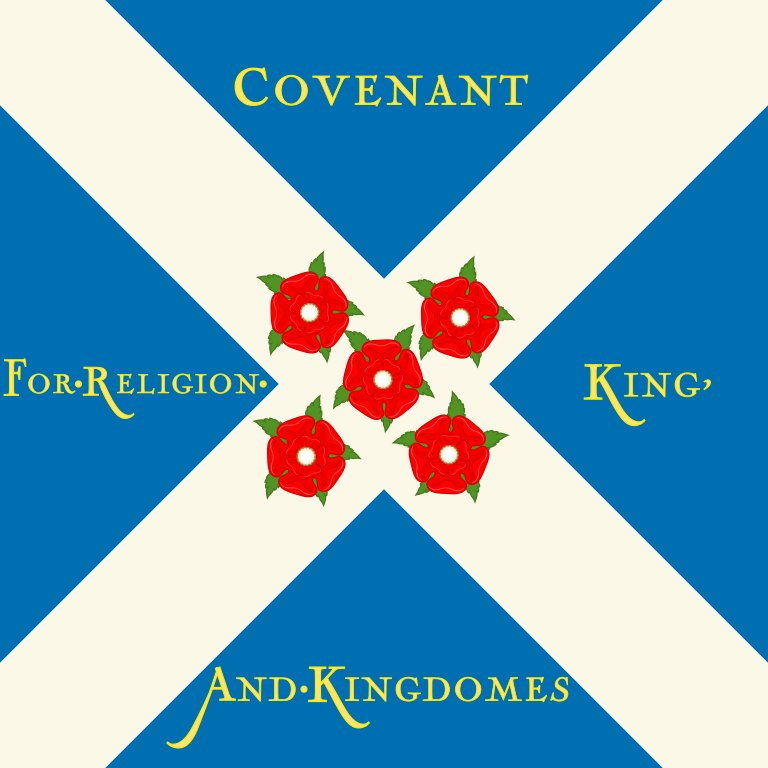
Scottish Covenanter flag, after a replica held by the Royal Scottish Museum. SVG by MrPenguin20 via Wikimedia, CC BY-SA 3.0.
-
5th & 6th chieftains
Donald Glas MacGregor, 5th chieftain of Glengyle. Born about 1620 & died 1693. John MacGregor, 6th chieftain of Glengyle. Born about 1658 & died in January 1694.
Note that period of chieftainships is estimated.
Adapted from badges by Celtus, via Wikimedia, CC BY-SA 3.0.
-
Rob Roy MacGregor's lifetime
Rob Roy MacGregor was born at Glengyle, the third son of Donald Glas MacGregor (5th chieftain) and Margaret Campbell of Glenlyon. He married Mary MacGregor of Comar in 1693 and settled at Inversnaid, dealing in cattle and offering protection to drovers in return for ‘black mail’. After losing his lands to the Duke of Montrose around 1712 over a disputed loan he turned outlaw, raided his creditor's estates for over a decade, and fought in the 1715 Jacobite rising at Sheriffmuir.
He was pardoned by George I in 1722 and lived more openly thereafter, sheltering at Balquhidder under the alias Robert Campbell while the proscription of his name remained in force. The Highland Rogue (1723) made him a legend in his own lifetime; Walter Scott's novel a century later turned him into a fixture of the Romantic imagination. He died on the 28th of December 1734 and is buried at the Old Parish Church in Balquhidder.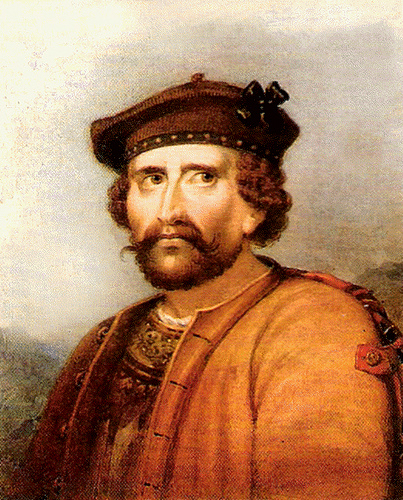
Rob Roy MacGregor. Engraving by W. H. Worthington, c.1820s. Walter Scott Digital Collection, University of Edinburgh, public domain.
-
Massacre at Glencoe
Before dawn on 13 February 1692, soldiers of the Earl of Argyll's regiment, billeted on the MacDonalds of Glencoe for nearly a fortnight, turned on their hosts under government orders and killed around thirty-eight of them.
The officer in command, Captain Robert Campbell of Glenlyon, was the half-brother of Margaret Campbell of Glenlyon - mother of Rob Roy MacGregor of Glengyle. The breach of Highland hospitality at Glencoe became a defining grievance of the Jacobite generation.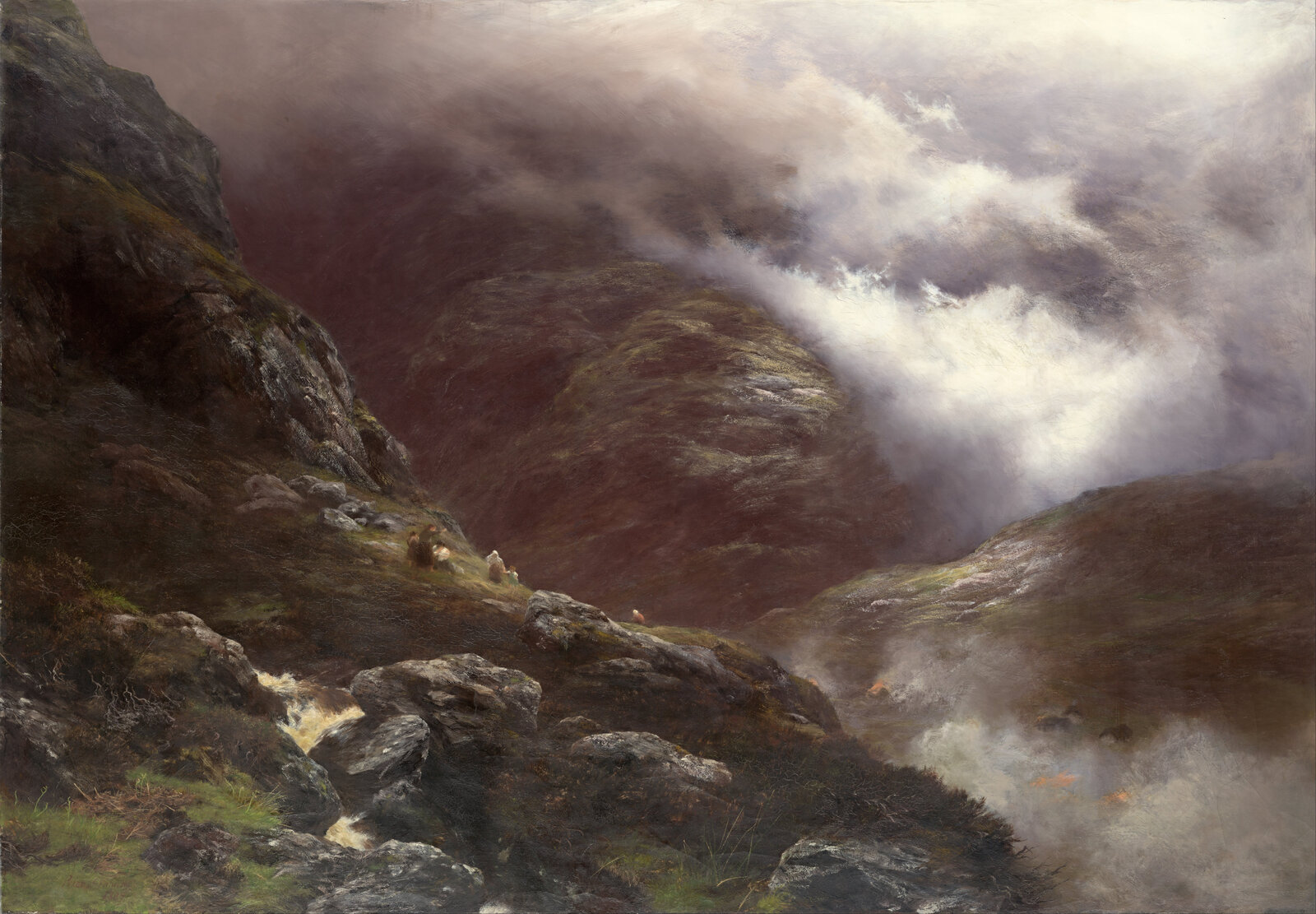
Peter Graham, After the Massacre of Glencoe (1889). National Gallery of Victoria, public domain.
-
7th & 8th chieftains
Gregor MacGregor, 7th chieftain of Glengyle. Born about 1689 & died on the 21st of August 1777.
It is assumed that John VIII is numbered in the genealogy because he was the legitimate heir, but he predeceased his father and thus never formally held the chieftaincy. John MacGregor, who would have been 8th chieftain was born on the 7th of November 1708 & died on the 30th December 1774.
Note that period of chieftainships are estimated.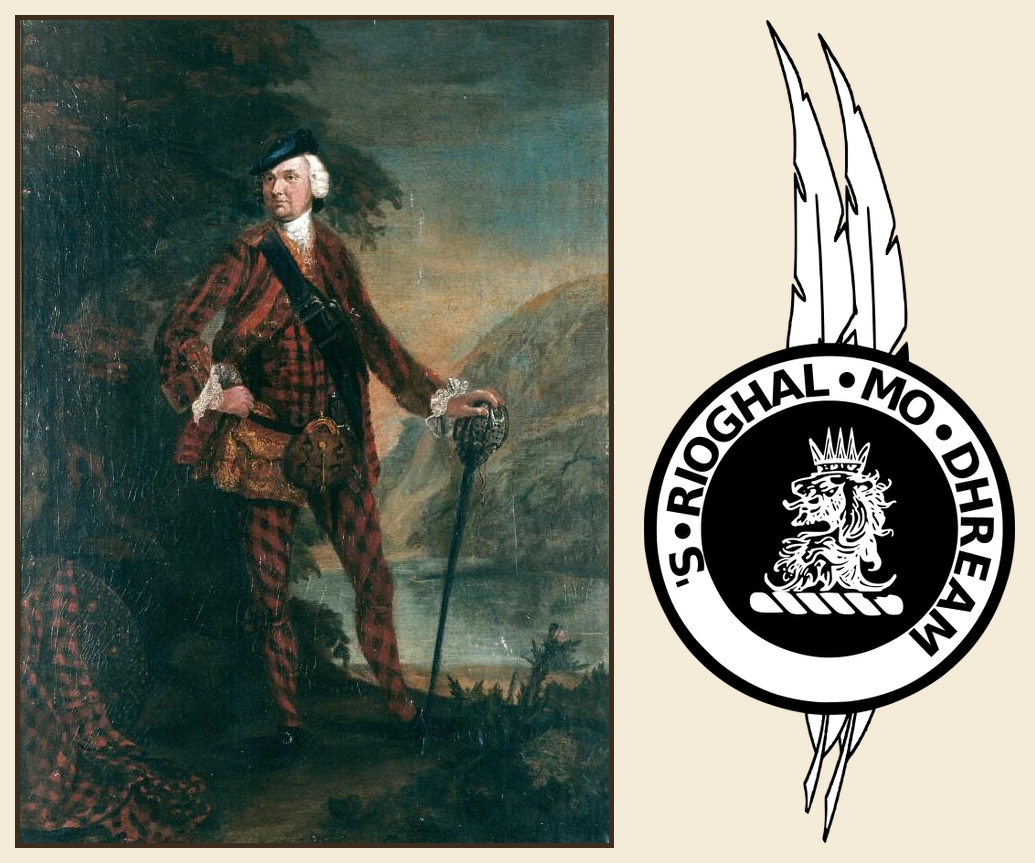
Gregor Ghlun Dubh MacGregor, 7th chieftain of Glengyle, in the red and black tartan. Portrait c.1740-50, artist unknown; reproduction via Peter Eslea MacDonald, “MacGregor Black and Red (Rob Roy) Tartan”. Badge (adapted): Celtus, CC BY-SA
-
Act of Union
The Treaty of Union merged the Scottish and English Parliaments into a single Parliament of Great Britain at Westminster. Scotland kept its own legal system, established Kirk and education, but lost its parliament. The Union was bitterly unpopular in much of Scotland, and especially in the Highlands - opposition fed the Jacobite risings of 1715, 1719 and 1745, in each of which MacGregors took the field.
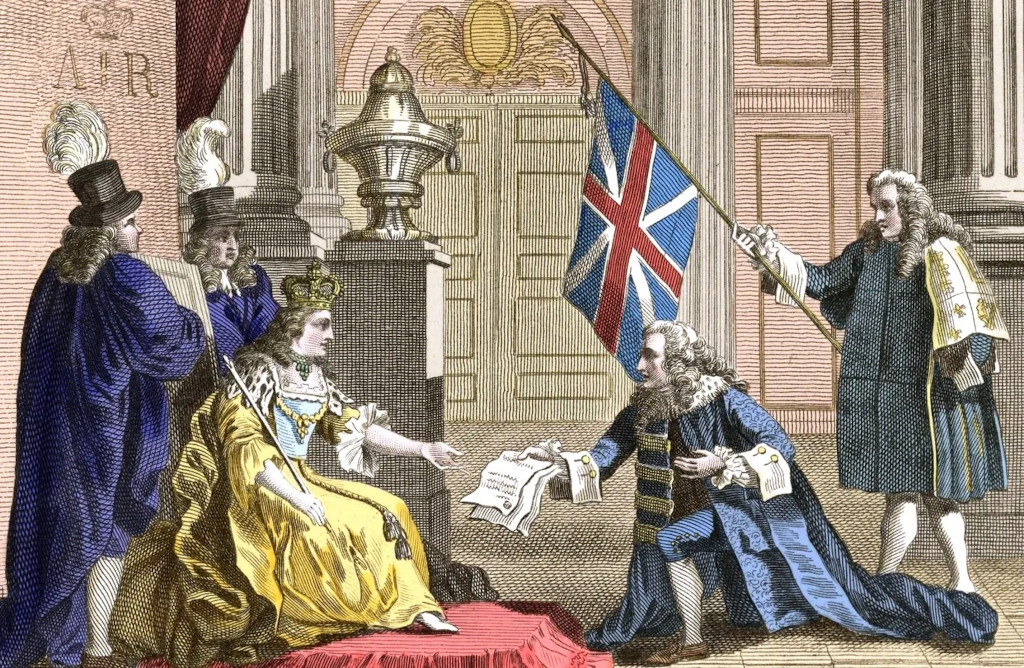
James Douglas, 2nd Duke of Queensberry, presenting the Act of Union to Queen Anne, 1707. After Samuel Wale (later 18th century), public domain.
-
Failed Jacobite revolt
The 1715 rising aimed to restore James Francis Edward Stuart, the Old Pretender, to the British throne. John Erskine, Earl of Mar, raised the Jacobite standard at Braemar in September 1715 and gathered a substantial Highland army, but his indecisive performance at the Battle of Sheriffmuir on 13 November left the rising stalled. James himself landed at Peterhead in December but arrived too late to save it; by February 1716 he and the leading Jacobites had fled to France and the rising had collapsed. Many MacGregors, including Rob Roy, fought on the Jacobite side at Sheriffmuir.
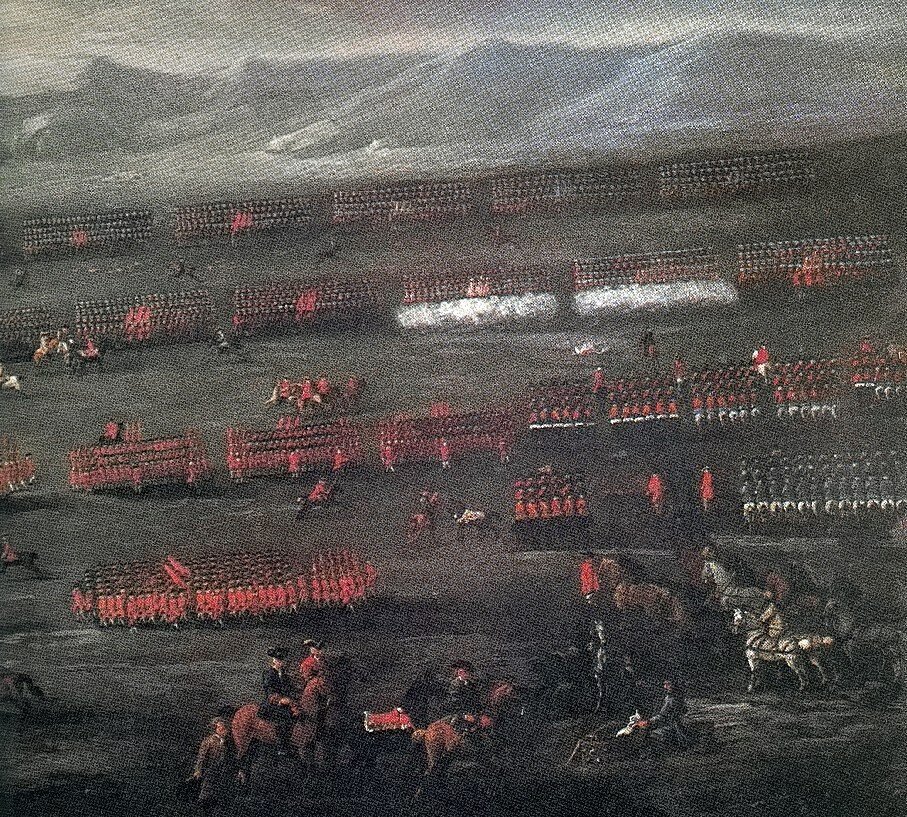
John Wootton, The Battle of Sheriffmuir (c.1715). Public domain.
-
Failed Jacobite revolt
The 1719 rising was a small Spanish-backed attempt to restore the Stuarts, mounted as part of the War of the Quadruple Alliance. The main Spanish invasion fleet was scattered by storm off Galicia, but a smaller force of around 300 Spanish marines and Jacobite leaders landed at Loch Duich in April 1719 and made Eilean Donan Castle their base. Royal Navy frigates bombarded and destroyed the castle in May, and on 10 June a government army defeated the Jacobites at the Battle of Glen Shiel, ending the rising in a single afternoon. Rob Roy MacGregor commanded a contingent of MacGregors in the Jacobite line.
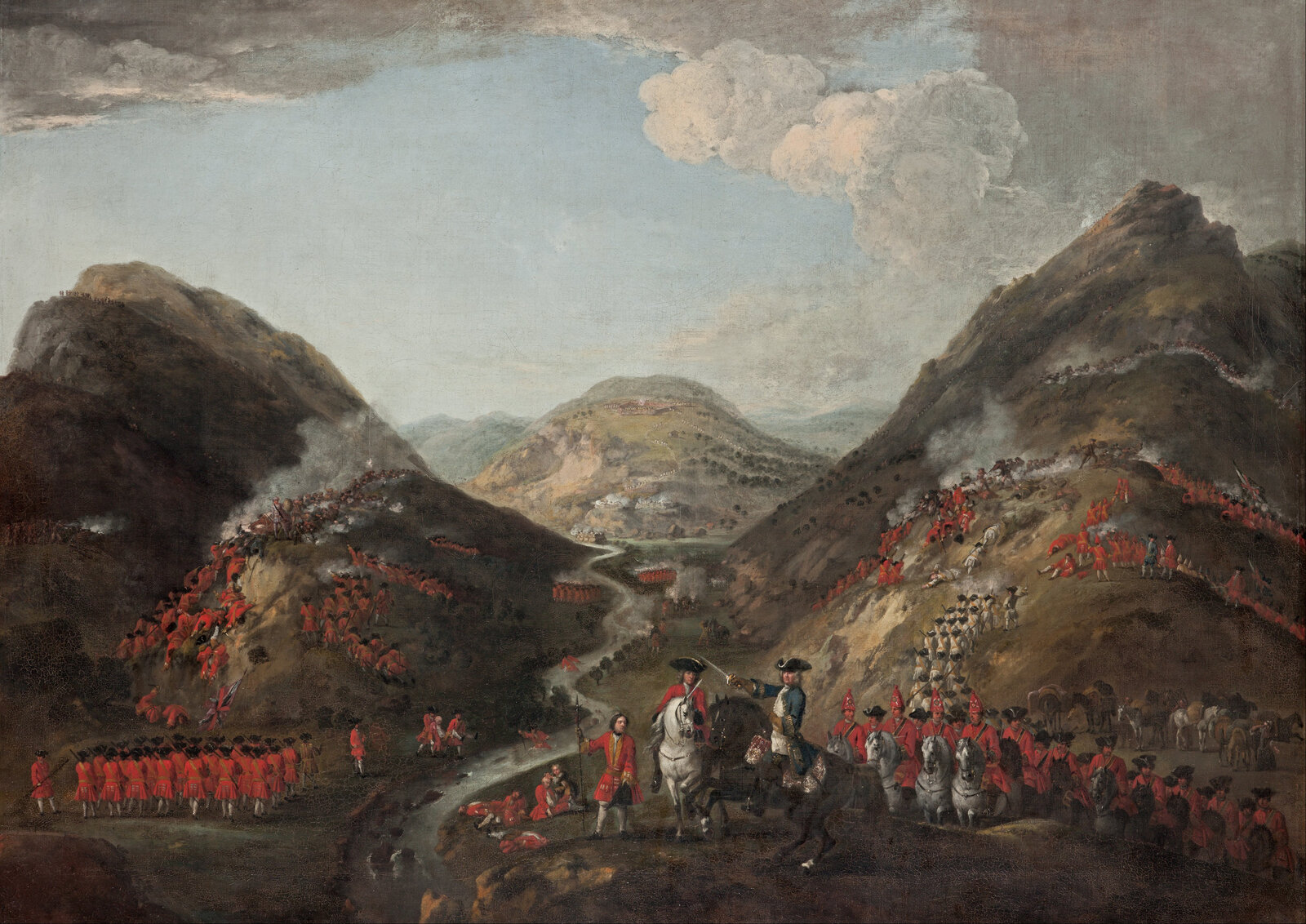
Peter Tillemans, The Battle of Glenshiel 1719. National Galleries of Scotland, public domain.
-
The Highland Rogue (fiction)
“A fictionalised account of his life, The Highland Rogue, was published in 1723. Rob Roy became a legend in his own lifetime and George I was moved to issue a pardon for his crimes just as he was about to be transported to the colonies.” (Wikipedia)
Read the 1743 W. Webb reissue (same text as the 1723 original) at the Internet Archive. The 1723 first edition itself is held by the British Library and digitised in Gale ECCO (subscription only).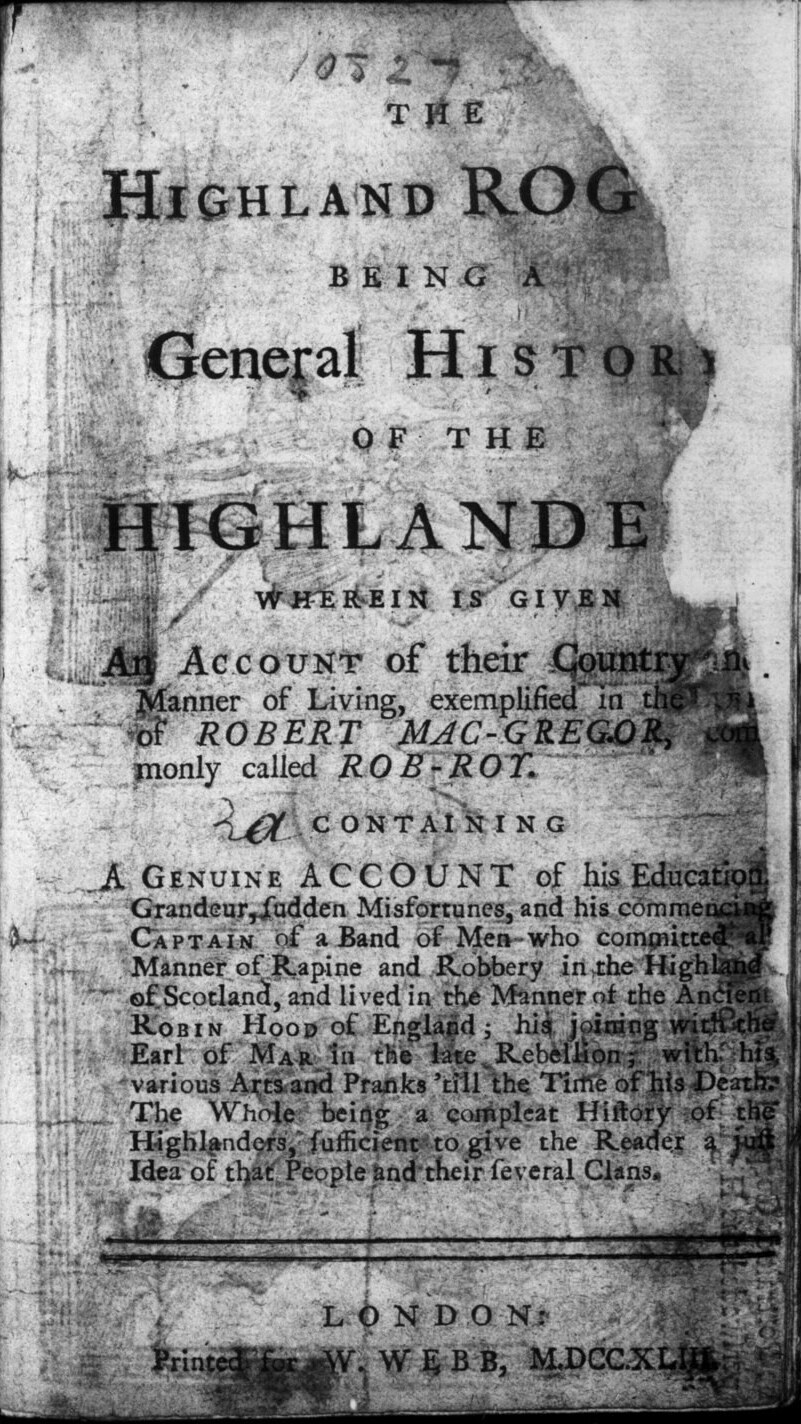
Title page of the 1743 reissue of The Highland Rogue (London: W. Webb).
-
MacGregor of Glengyle Tartan
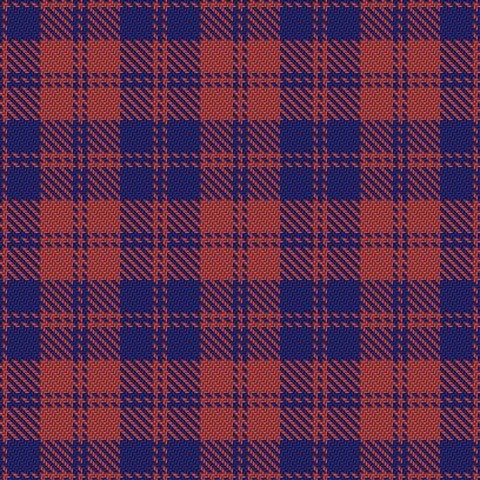
One of four official Clan Gregor tartans. “MacGregors who believe they come from the Glengyle branch of the clan can wear this tartan if they wish.” (clangregor.com)
-
Last Jacobite revolt begins
Charles Edward Stuart, the Young Pretender, raises his father's standard at Glenfinnan on 19 August 1745, with around 1,200 clansmen gathered at the head of Loch Shiel. The rising spreads quickly: the Jacobites take Edinburgh in September and rout a government army at Prestonpans, then march south as far as Derby before turning back at the start of December. Clan Gregor turns out under Gregor Ghlun Dubh of Glengyle and his son James Mor; Rob Roy's son James leads a MacGregor regiment through the campaign. The rising will end at Culloden the following April.
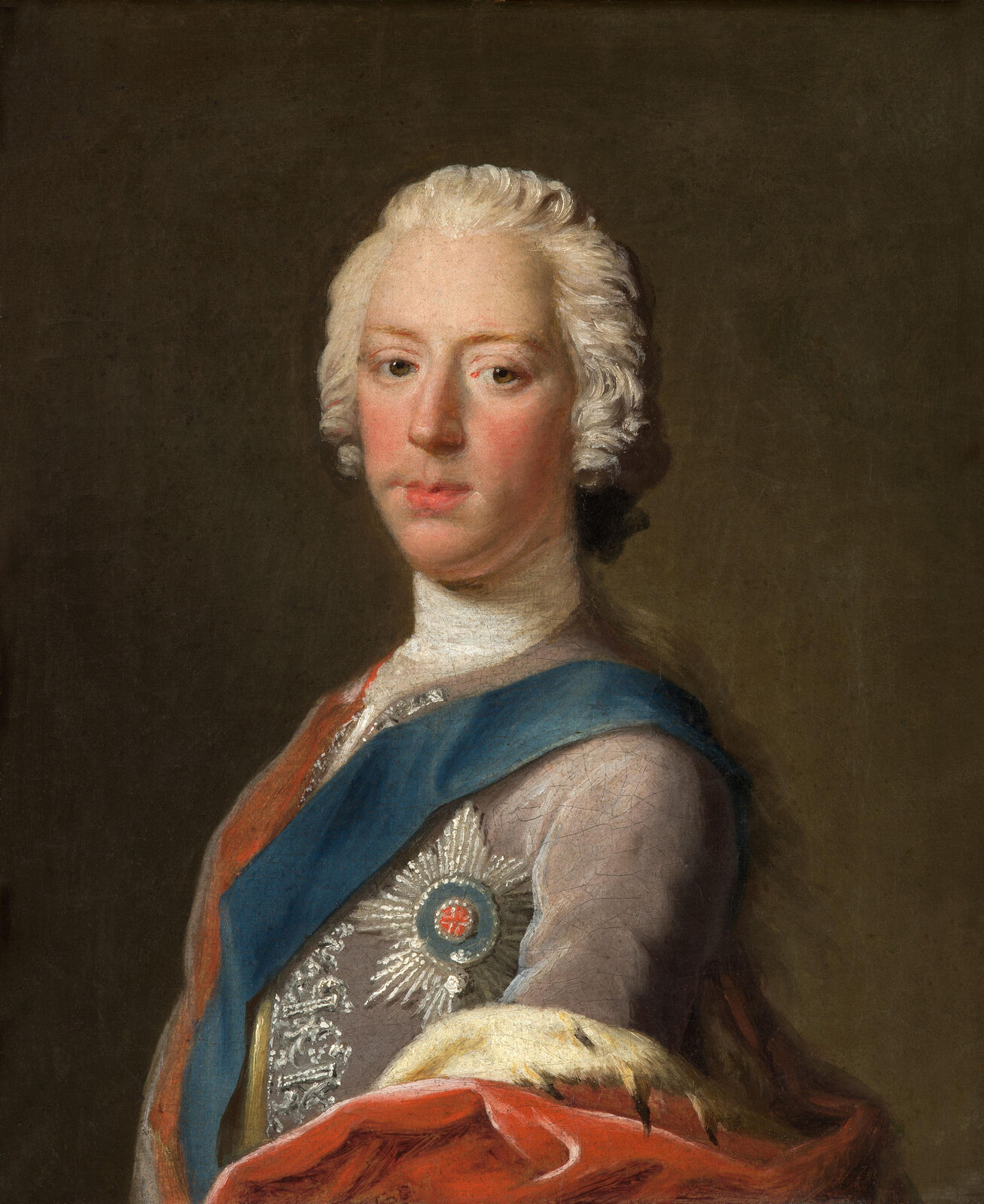
Allan Ramsay, Prince Charles Edward Stuart (1745), painted from life in Edinburgh during the rising. Scottish National Portrait Gallery (PG 3762), public domain.
-
Battle of Culloden
On the morning of 16 April 1746, the Jacobite army under Charles Edward Stuart met government forces under William, Duke of Cumberland on Drummossie Moor, east of Inverness. Outnumbered, exhausted by a failed night march, and forced to fight on open ground that suited Cumberland's artillery, the Highlanders were broken in under an hour: around 1,500 Jacobites were killed for fewer than fifty government casualties. The Glengyle MacGregor regiment under James Mor, Rob Roy's son, was not at Culloden, having been detached weeks earlier to garrison Doune Castle. Cumberland's pursuit of the wounded and the harrying of the glens that followed earned him the name ‘Butcher Cumberland’ and accelerated the dismantling of Highland society. It was the last pitched battle fought on British soil.
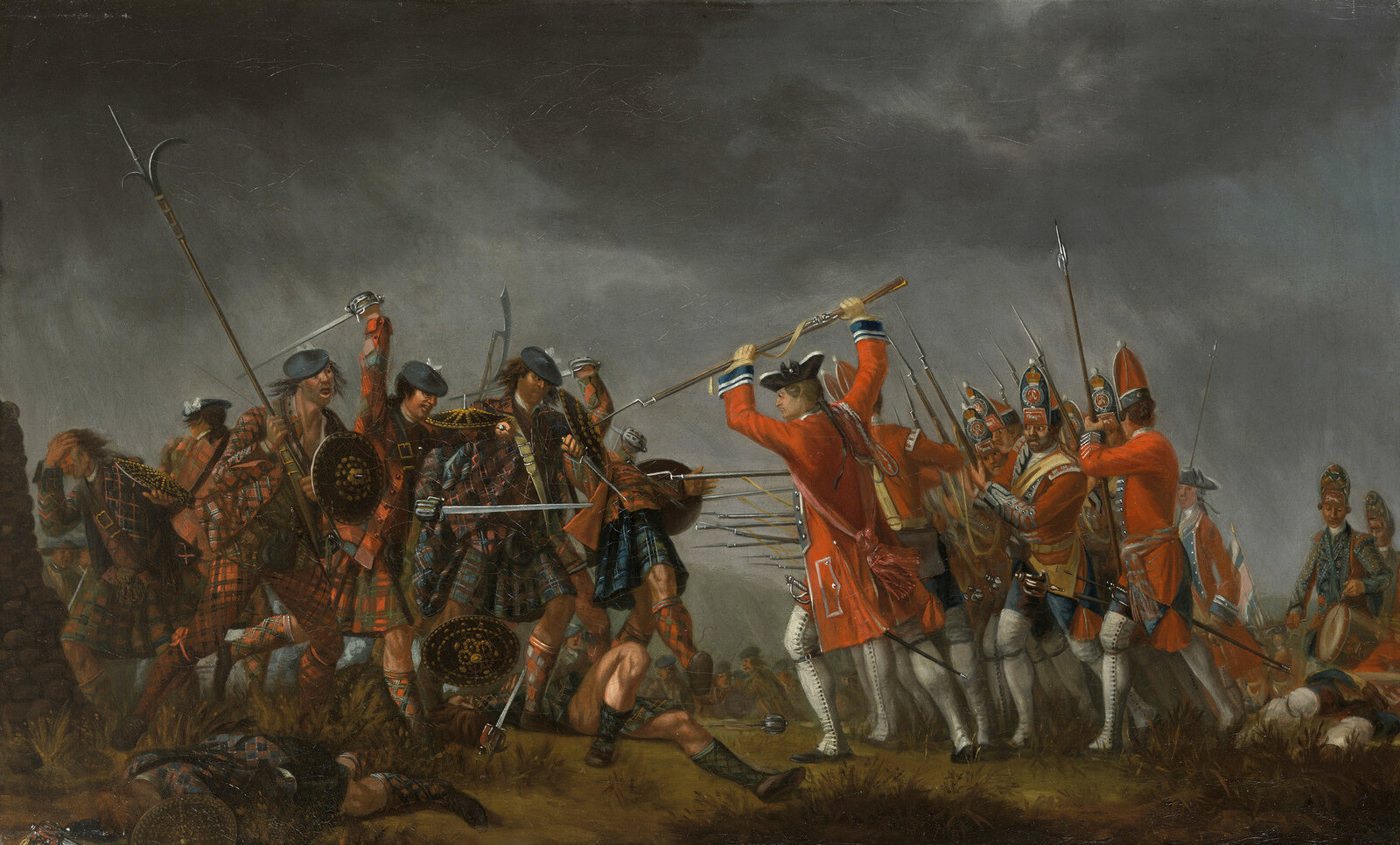
David Morier, An Incident in the Rebellion of 1745 (c.1746). Royal Collection, public domain.
-
Act of Proscription
The Act of Proscription, passed in the wake of the 1745 rising, banned the carrying of weapons and the wearing of tartan and Highland dress in an attempt to dismantle Highland clan society. Full Highland dress was permitted only to government regiments; soldiers in kilts were the only legal kilts in Scotland between 1746 and 1782. For the MacGregors it stacked on top of the proscription of 1603: the name was still outlawed when the dress ban came in, and was restored in 1774 - eight years before the Dress Act provisions were finally repealed in 1782.
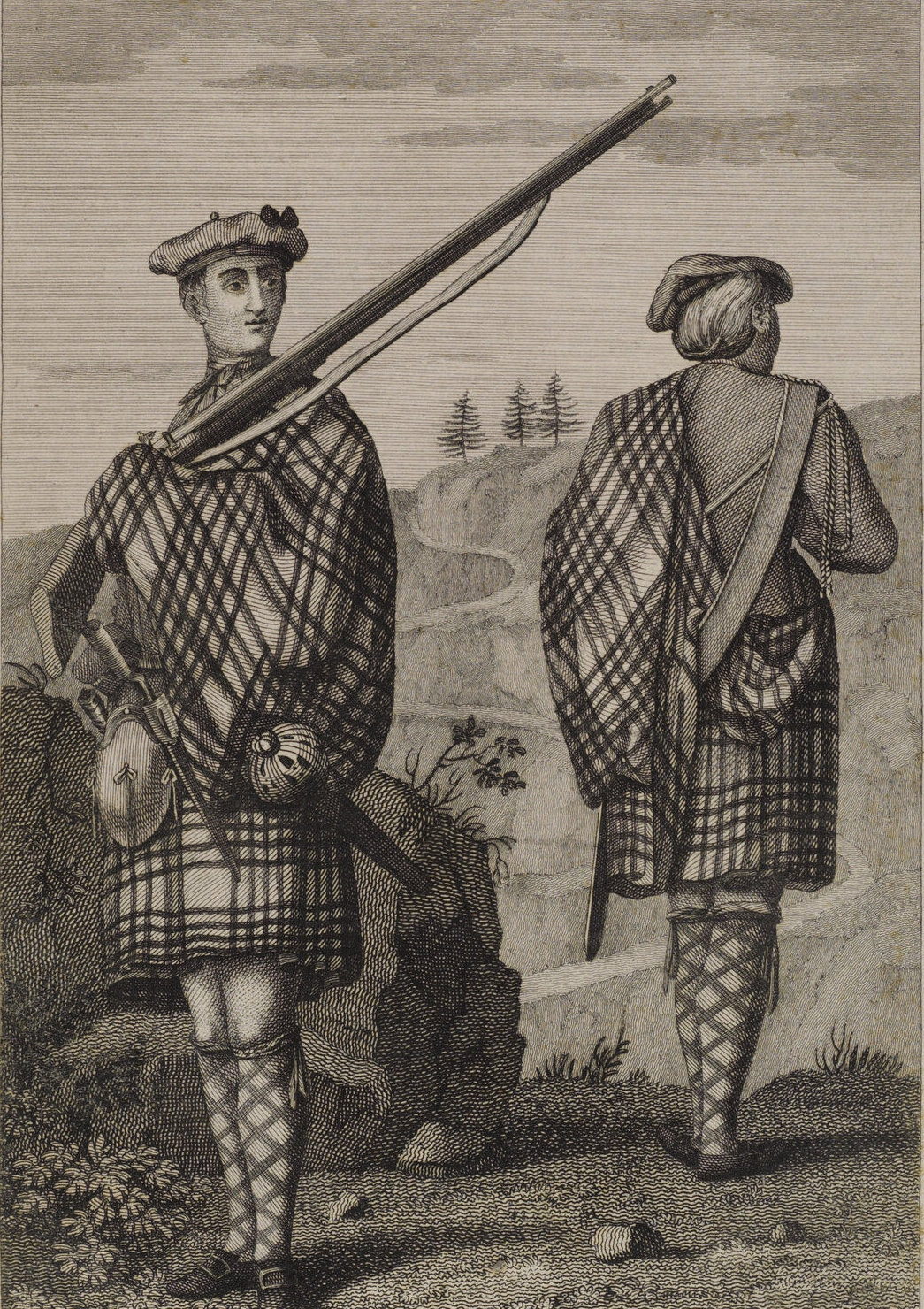
Highland Soldiers. Engraving published by J. Hooper, 1763. National Library of Scotland, public domain.
-
Heritable Jurisdictions (Scotland) Act
The Heritable Jurisdictions Act, passed in the wake of the 1745 rising, abolished the private courts that Scottish chiefs and great landowners had held over their own lands - the legal underpinning of the old clan order. Compensation was paid for the rights surrendered, with Argyll alone receiving £21,000. The MacGregors of Glengyle had no heritable jurisdiction of their own to lose: by 1703 they held the lands on a feu charter from the Marquis of Montrose, not as a feudal superior. But the Act dismantled the wider Highland framework within which clans like theirs had functioned for centuries, and accelerated the post-Culloden unmaking of clan society.
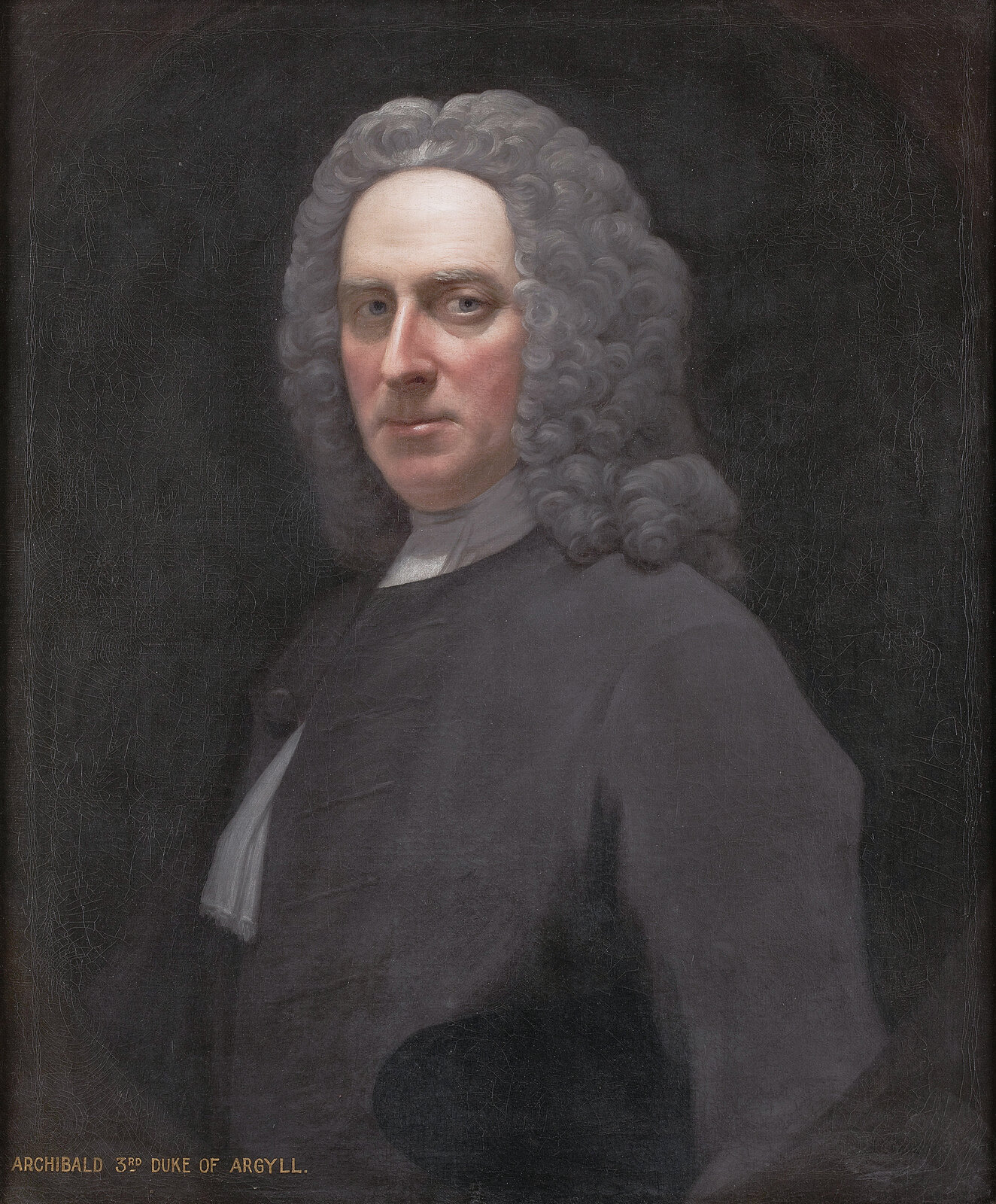
Allan Ramsay, Archibald Campbell, 3rd Duke of Argyll (1748). Argyll surrendered the largest set of heritable jurisdictions and received £21,000 in compensation, the largest single payment made. Public domain.
-
Walter Scott's lifetime
Walter Scott's writings - Rob Roy and The Lady of the Lake above all - shaped how the wider world saw Glengyle, Loch Katrine and the MacGregor name.
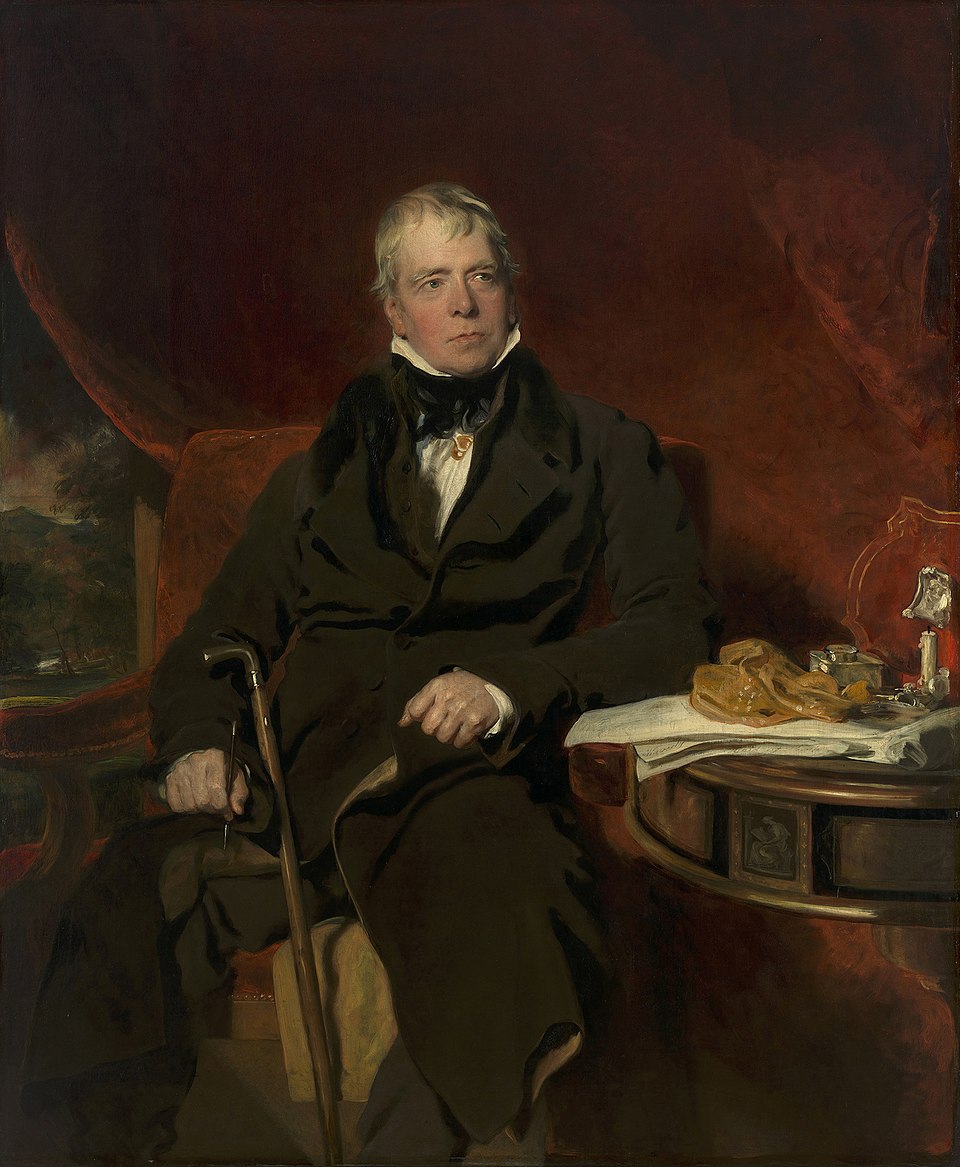
Sir Thomas Lawrence, Sir Walter Scott (1820-1826). Royal Collection (RCIN 400644), public domain.
-
9th chieftain
James MacGregor, 9th chieftain of Glengyle. Born about 1740 & died on the 24th of March 1798.
Note that period of chieftainship is estimated.
Adapted from badges by Celtus, via Wikimedia, CC BY-SA 3.0.
-
Highland Clearances
The Clearances were a wave of forced evictions across the Highlands and Islands from the late eighteenth century, as landlords cleared old peasant farming to make room for large sheep walks let at higher rents. The brutality fell hardest in Sutherland, Strathnaver and the western isles, but population drained from glens across the Highlands. For the MacGregors, the period coincided almost exactly with the lifting of the proscription in 1774: the name was free to be used again, but much of the clan was already scattered across Scotland under aliases and beginning to emigrate to North America and Australasia.
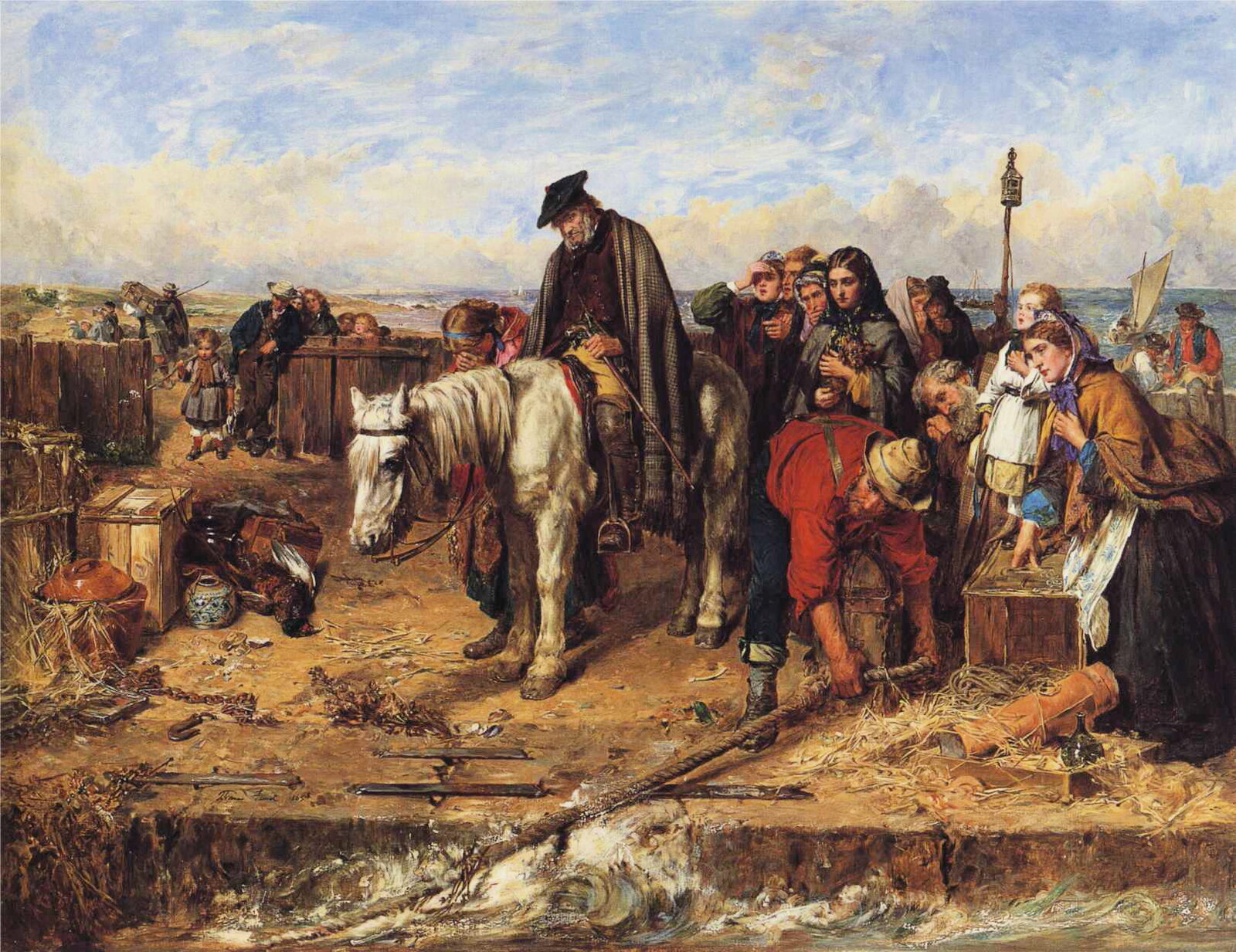
Thomas Faed, The Last of the Clan (1865). Glasgow Museums, public domain.
-
Walter Scott visited Balquhidder
Walter Scott aged about 16 visited the Balquhidder area as an apprentice lawyer, where he heard firsthand accounts about Rob Roy.
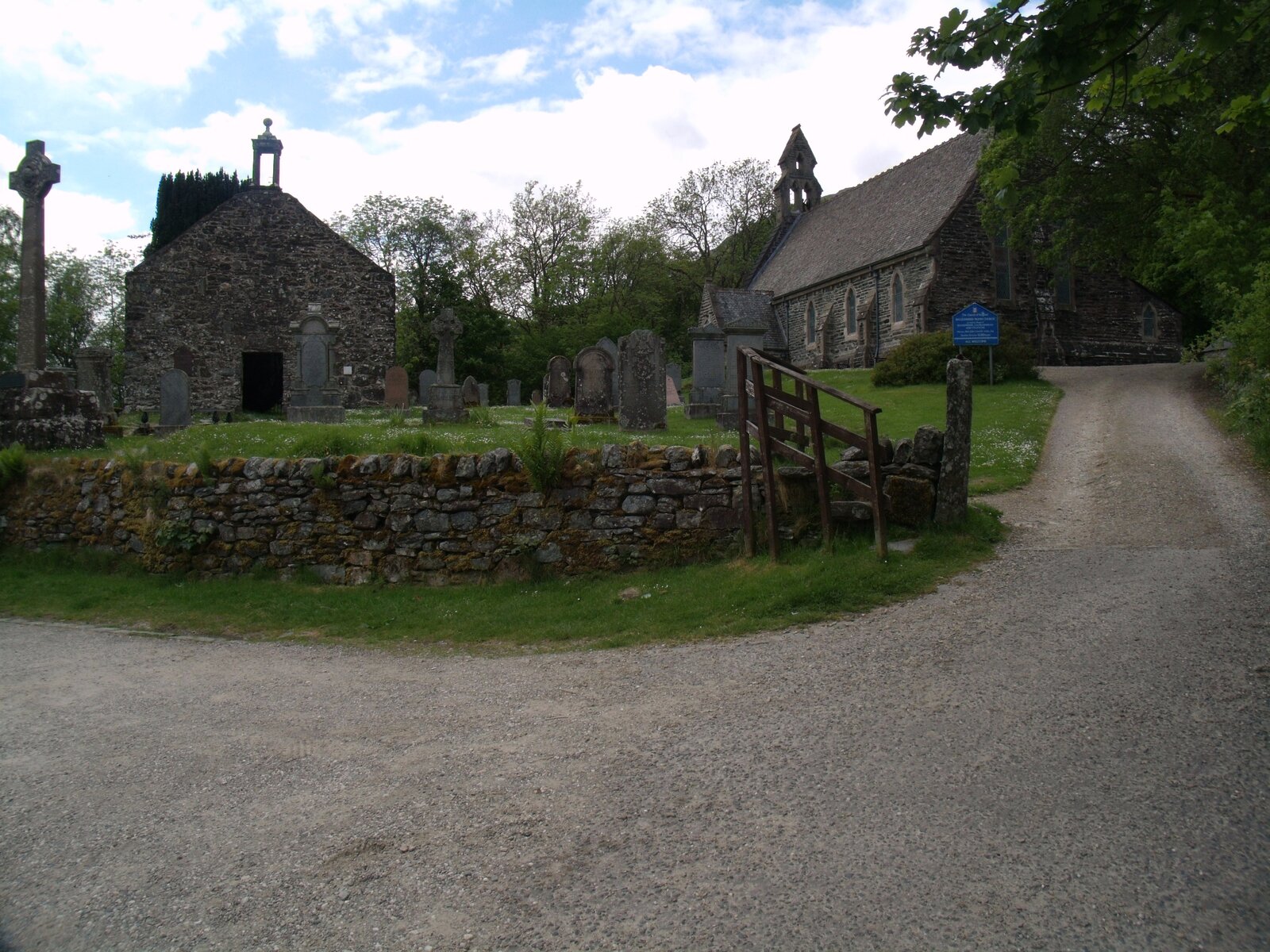
Balquhidder kirkyard, with the ruin of the old kirk Walter Scott would have known in 1786 alongside its 1855 successor. Photo by Euan Nelson, via Wikimedia, CC BY-SA 2.0.
-
Gregor MacGregor's lifetime
Gregor MacGregor, “Cacique of Poyais” and a general in the service of the Republic of Venezuela, descended from the Glengyle line through the Murrays of Balquhidder, who carried that surname during the proscription of the MacGregor name. He died at Caracas in 1845.
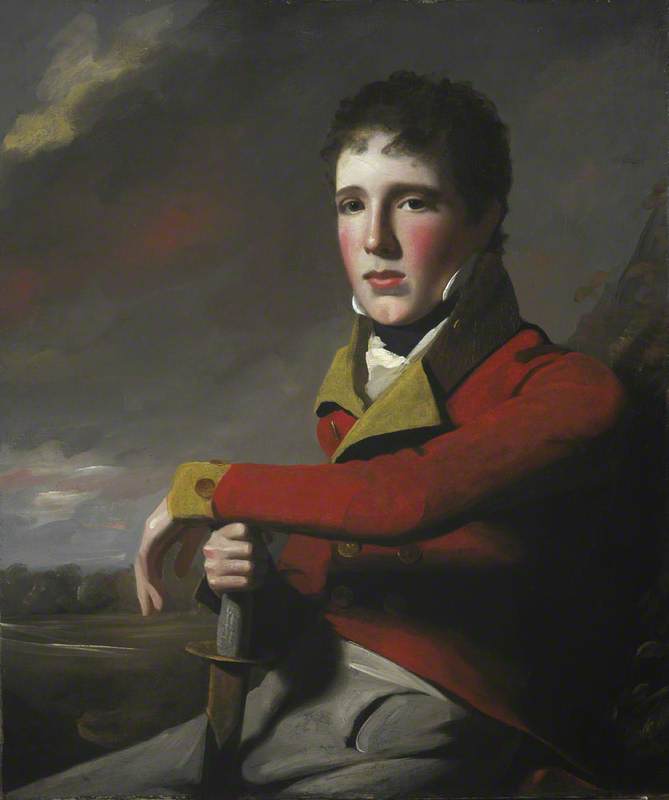
George Watson, Gregor MacGregor (1786-1845), Adventurer (1804), showing him as a young soldier in the uniform of the 57th Regiment of Foot. National Galleries of Scotland (PG 2201), public domain.
-
10th chieftain
John MacGregor, 10th chieftain of Glengyle. Born on the 12th of January 1795 & died on the 21st of January 1870.
Note that period of chieftainship is estimated.
Adapted from badges by Celtus, via Wikimedia, CC BY-SA 3.0.
-
Rob Roy's Grave (poem)
William Wordsworth wrote a poem called “Rob Roy's Grave” during a visit to Scotland in 1803. It was first printed in his Poems, in Two Volumes (1807).
Read the full text at Project Gutenberg.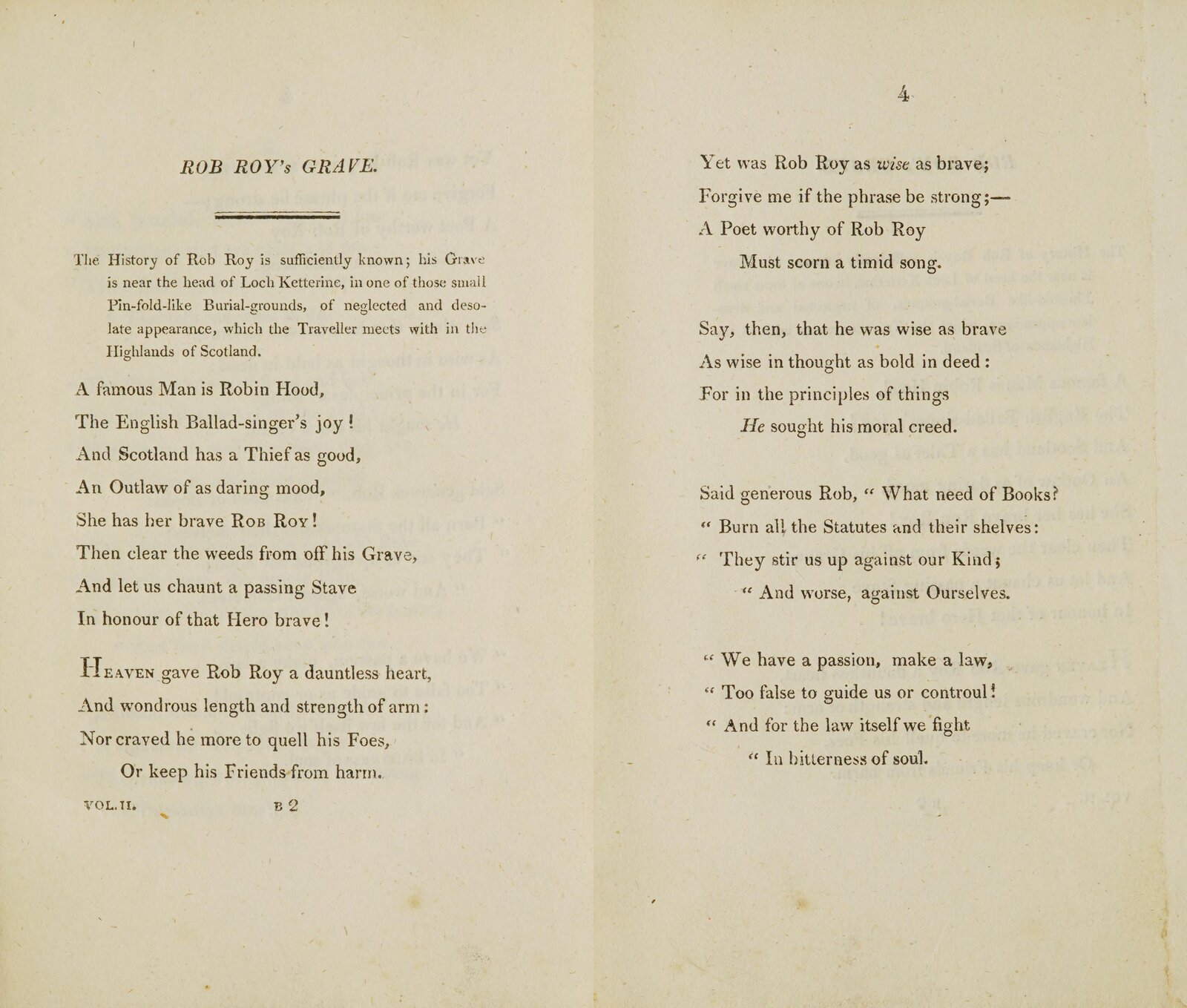
Opening pages of “Rob Roy's Grave” in William Wordsworth's Poems, in Two Volumes (London: Longman, 1807), Volume II, pp. 3-4. Internet Archive, public domain.
-
The Lady of the Lake (poem)
Sir Walter Scott’s poem The Lady of the Lake was published. This romanticized the Trossachs and Loch Katrine specifically, turning the area into one of the world's first tourist destinations.
Read the full text at Project Gutenberg.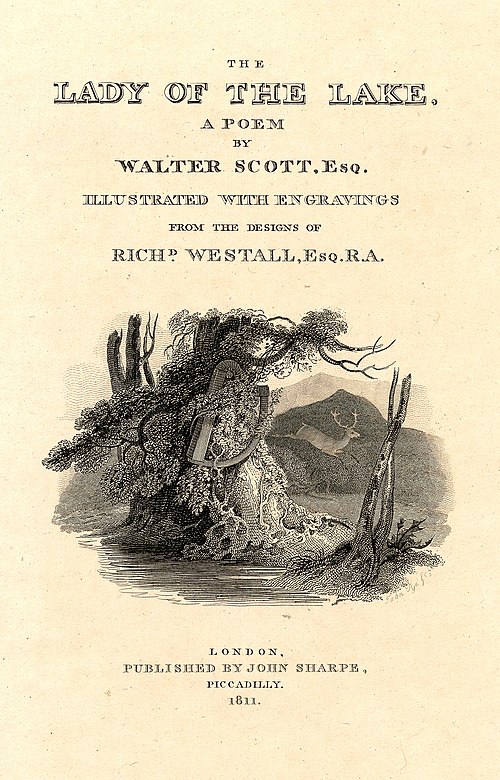
Title page of an 1811 edition of Walter Scott's The Lady of the Lake, illustrated after designs by Richard Westall (London: John Sharpe). Public domain.
-
Landscape with Tourists (painting)
“Landscape with Tourists at Loch Katrine by John Knox was painted around 1815, capturing the vivid landscapes described in ‘The Lady of the Lake’, where visitors waiting to board a ferry are greeted by a piper. The picture hangs in the National Galleries of Scotland.” (lochkatrine.com)
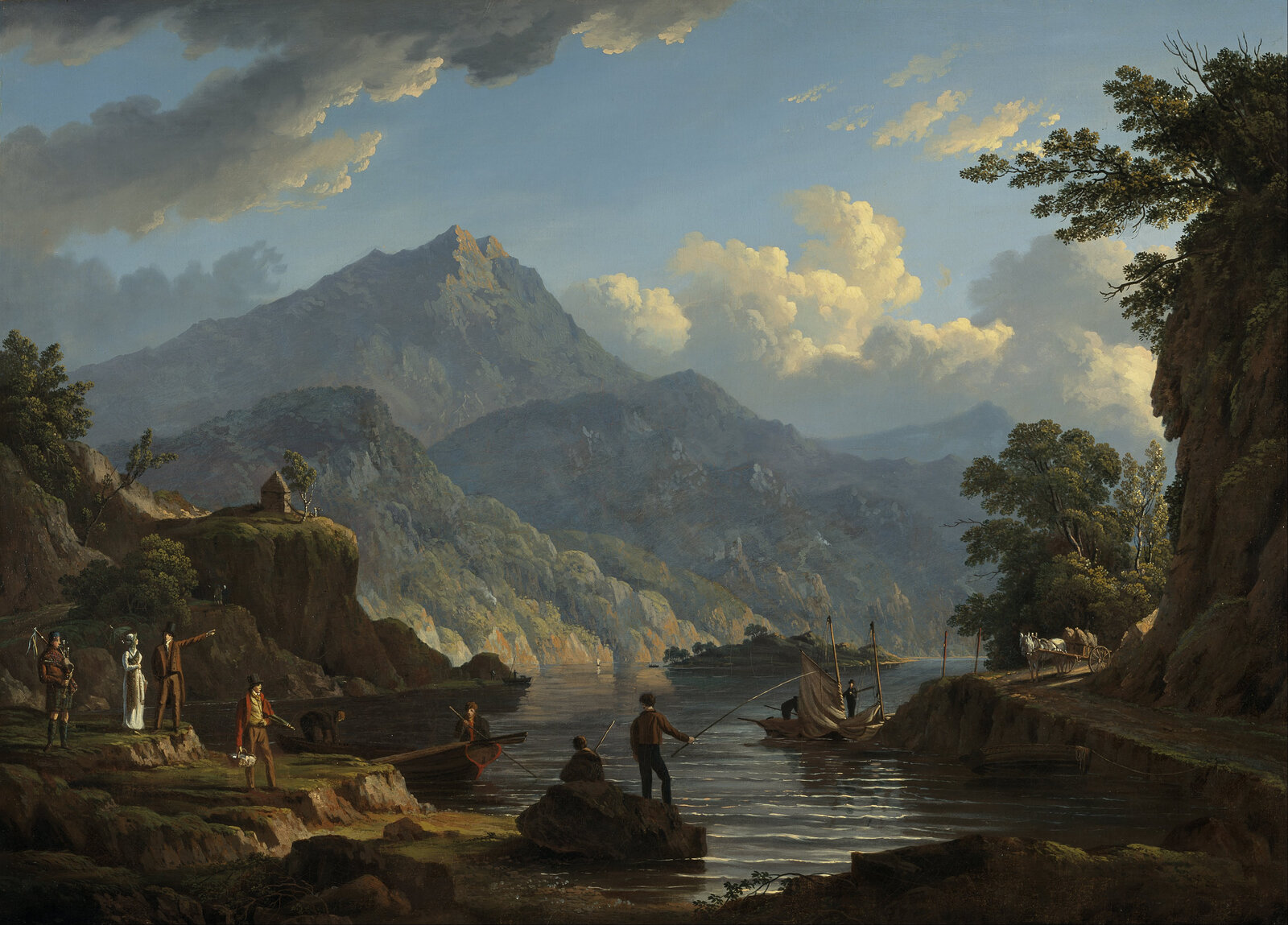
John Knox, Landscape with Tourists at Loch Katrine (c.1815). National Galleries of Scotland (NG 2557), via Google Arts and Culture, public domain.
-
Rob Roy (novel)
Walter Scott published his historical novel Rob Roy. Set in the months around the 1715 Jacobite rising, it follows the young Englishman Frank Osbaldistone into the Highlands and into the orbit of Rob Roy MacGregor, who dominates the second half of the book. Like Scott's earlier Lady of the Lake, the novel romanticised the Highlands for a Regency readership and turned its hero into a fixture of nineteenth-century popular imagination, feeding the wider tartan revival and the appetite that would underpin George IV's 1822 visit to Scotland.
Read the full text at Project Gutenberg.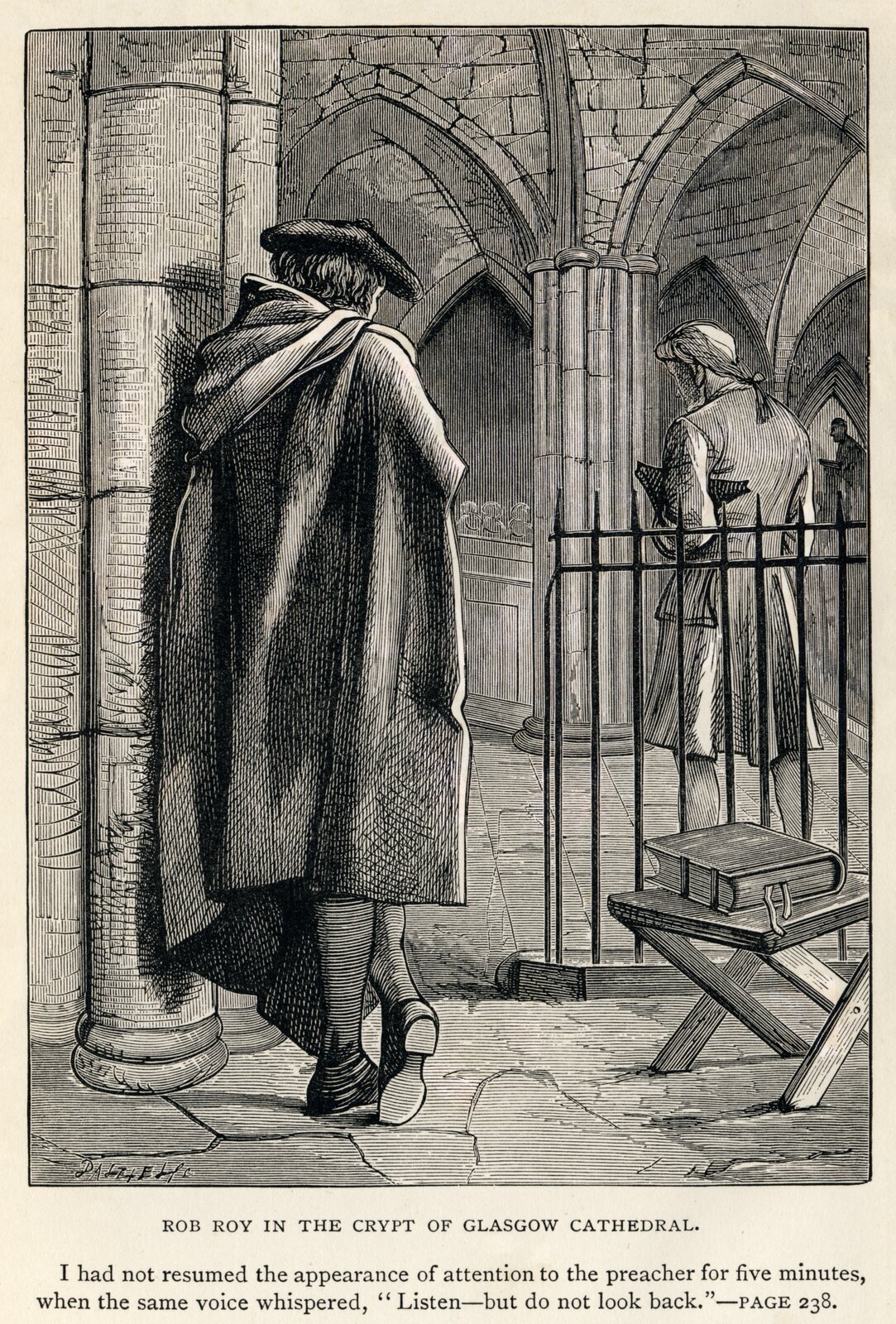
Rob Roy in the Crypt of Glasgow Cathedral - wood engraving by the Dalziel Brothers from the Centenary Edition of the Waverley Novels (Edinburgh: Adam & Charles Black, 1886). Public domain.
-
Rob Roy Tartan
The bold red-and-black check now known as the Rob Roy tartan is one of the oldest and simplest of all Highland setts, and it long predates the man whose name it carries. The same check appears in portraits from the late 17th century on, and Gregor Ghlun Dubh of Glengyle, Rob Roy's nephew, was painted wearing it around 1740. The Highland Society of London recorded a specimen in 1819; the ‘Rob Roy’ name attached itself only later, around the time of Walter Scott's novel rather than from the man himself. “The Red and Black tartan may be worn by any MacGregor.” (clangregor.com)

-
George IV's visit to Scotland
Walter Scott organized King George IV's visit to Scotland and arranged for Clan Gregor to serve as the King's honour guard.
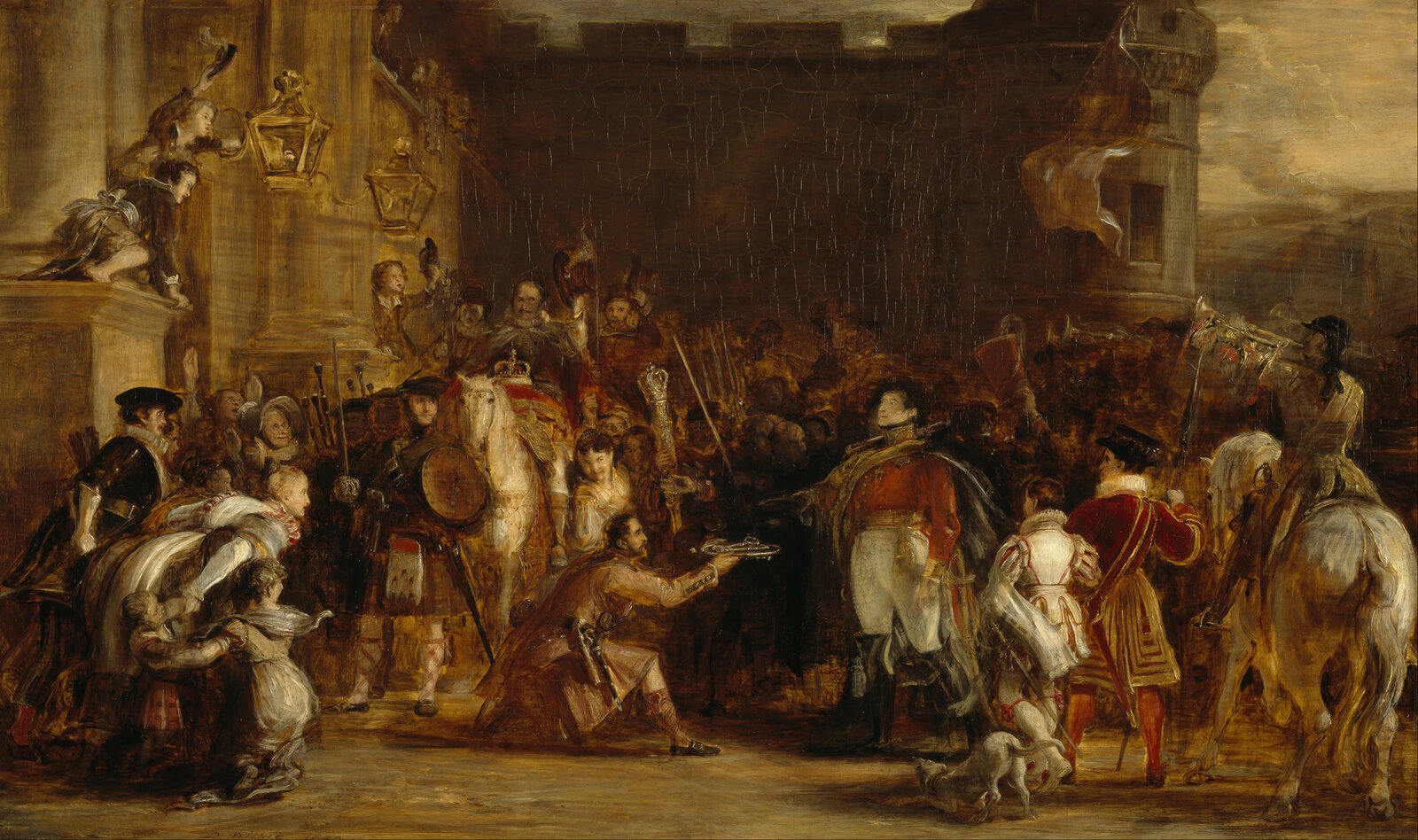
David Wilkie, The Entrance of George IV at the Palace of Holyroodhouse (1828). National Galleries of Scotland, public domain.
-
Clan Gregor Society founded
The Clan Gregor Society was founded in 1822, around the time of George IV's visit to Scotland, and is reckoned the third oldest clan society in Britain. In its early years it was run by a committee of Edinburgh and Glasgow professional men, all named MacGregor or McGregor, whose stated object was to extend “to the poor of the clan the benefits of a sound and Christian education”. It continues today as an international membership society and registered charity.
See About the Clan Gregor Society.
Badge by Celtus, 2009, via Wikimedia, CC BY-SA 3.0.
-
Sir Charles MacGregor's lifetime
A descendant of Rob Roy and brother to Norman, 12th chieftain of Clan Dougal Ciar. He is buried at Glengyle.
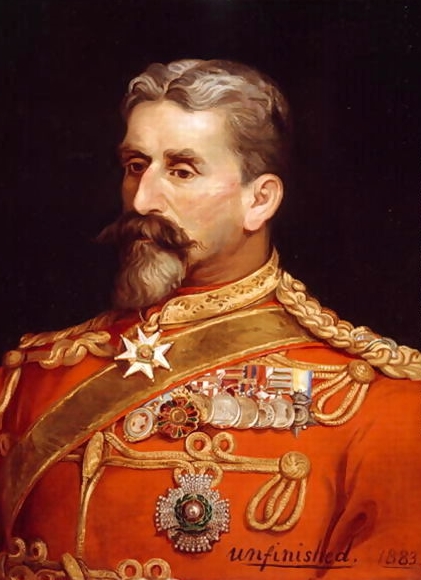
Michael Ciardiello, Major-General Sir Charles Metcalfe MacGregor (1883), inscribed “unfinished” in the lower right. National Army Museum, London (1952-03-1-1), public domain.
-
1st Steamer
“Loch Katrine's first Steamship, the Gipsy, was launched in 1843. However, she sank under mysterious circumstances just a week after her arrival, with the suspicion that the ferrymen of Water Witch had scuppered her, having not been given jobs on the new steamer. The Gipsy remains at the bottom of the deep water in the loch.” (lochkatrine.com)
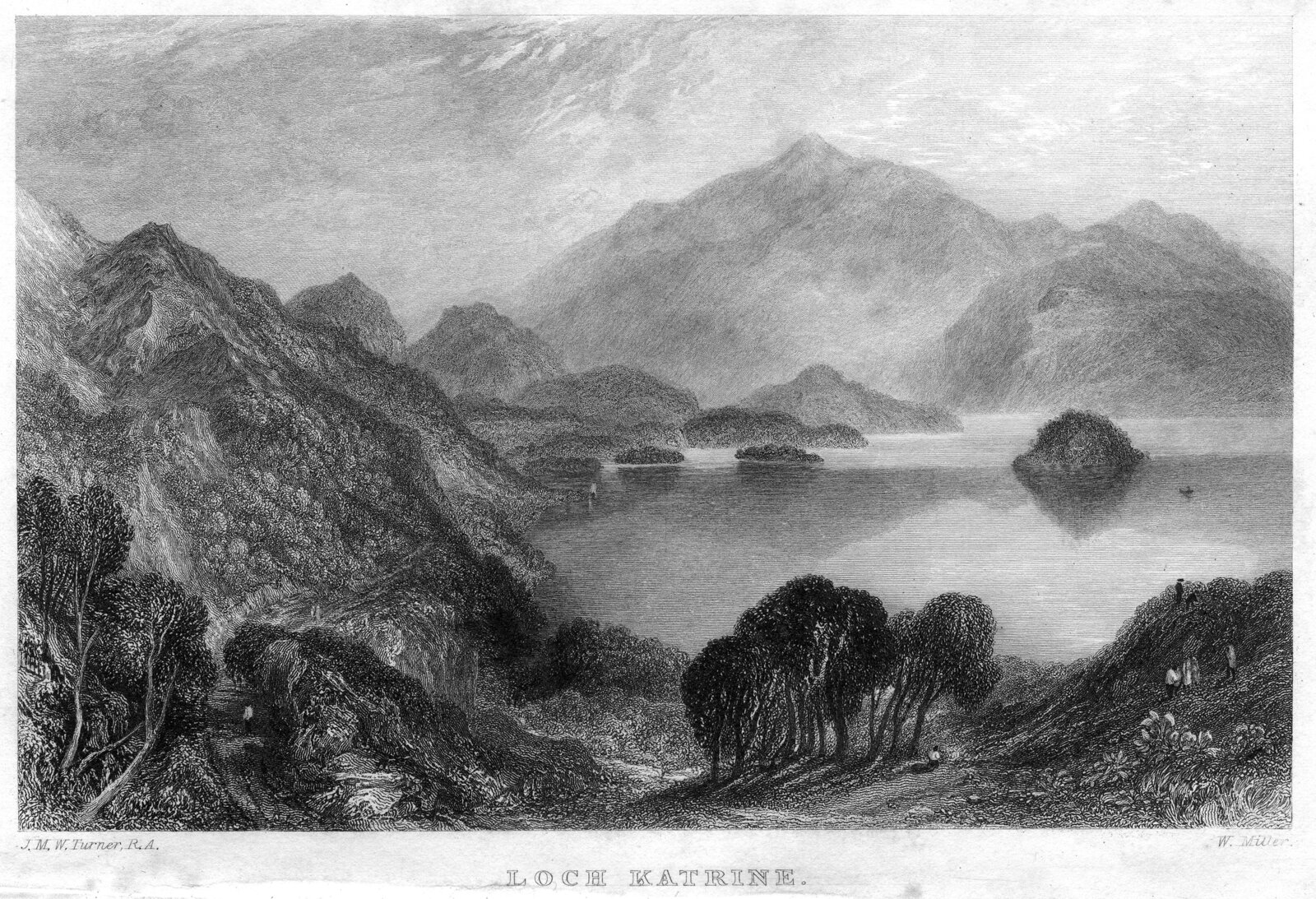
Loch Katrine, engraved by William Miller after J. M. W. Turner, 1833 - ten years before the Gipsy was set on the loch, and beneath which she still rests. From Walter Scott's Poetical Works (Edinburgh: Robert Cadell, 1833). Public domain.
-
S.S. Rob Roy
“The first Rob Roy Steamer was built in 1845 by the William Denny & Bros of Dumbarton on the River Clyde The 70ft Iron Paddle Steamer began sailing in July of that year and continued service until 1855. In 1855 she was sold to contractors working on raising the loch level as part of the work to construct the new waterworks.” (lochkatrine.com)
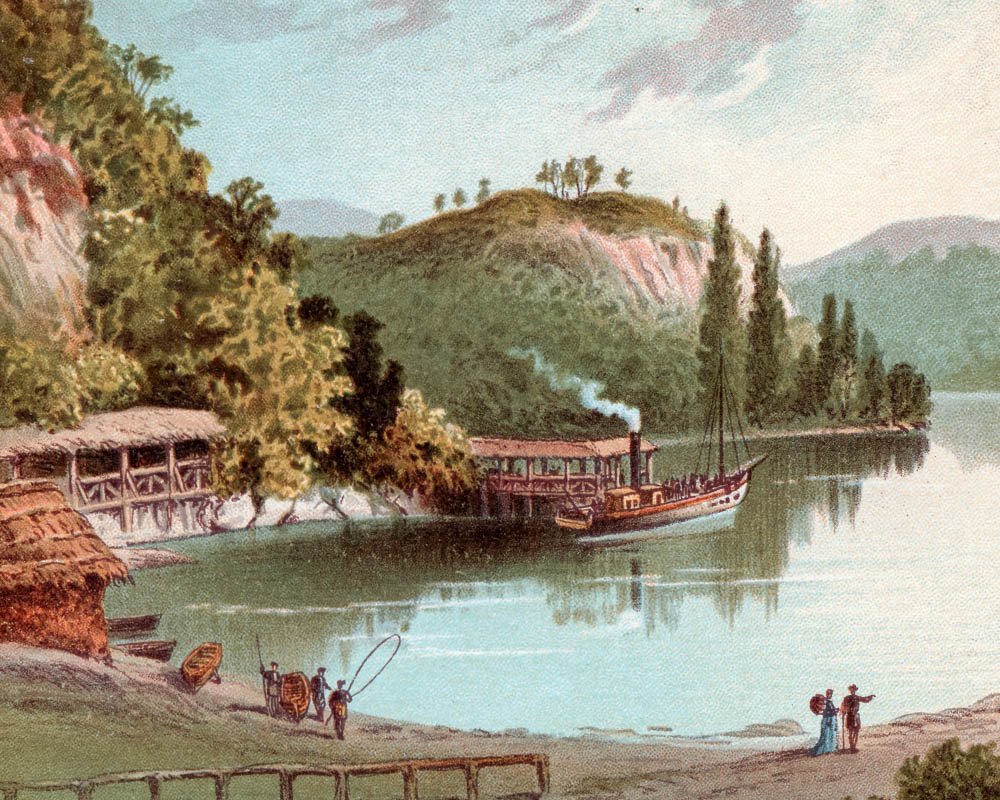
The Rob Roy steamer at a Loch Katrine pier. Victorian chromolithograph (late 19th century), via Loch Katrine Cruises. Public domain by age.
-
1st Aqueduct construction
Construction was started in 1855 and the works was opened by Queen Victoria in 1859. The loch was initially raised 1.2m. First water from Loch Katrine reached Glasgow on the 28th of December 1859, and the supply was extended city-wide in March 1860.
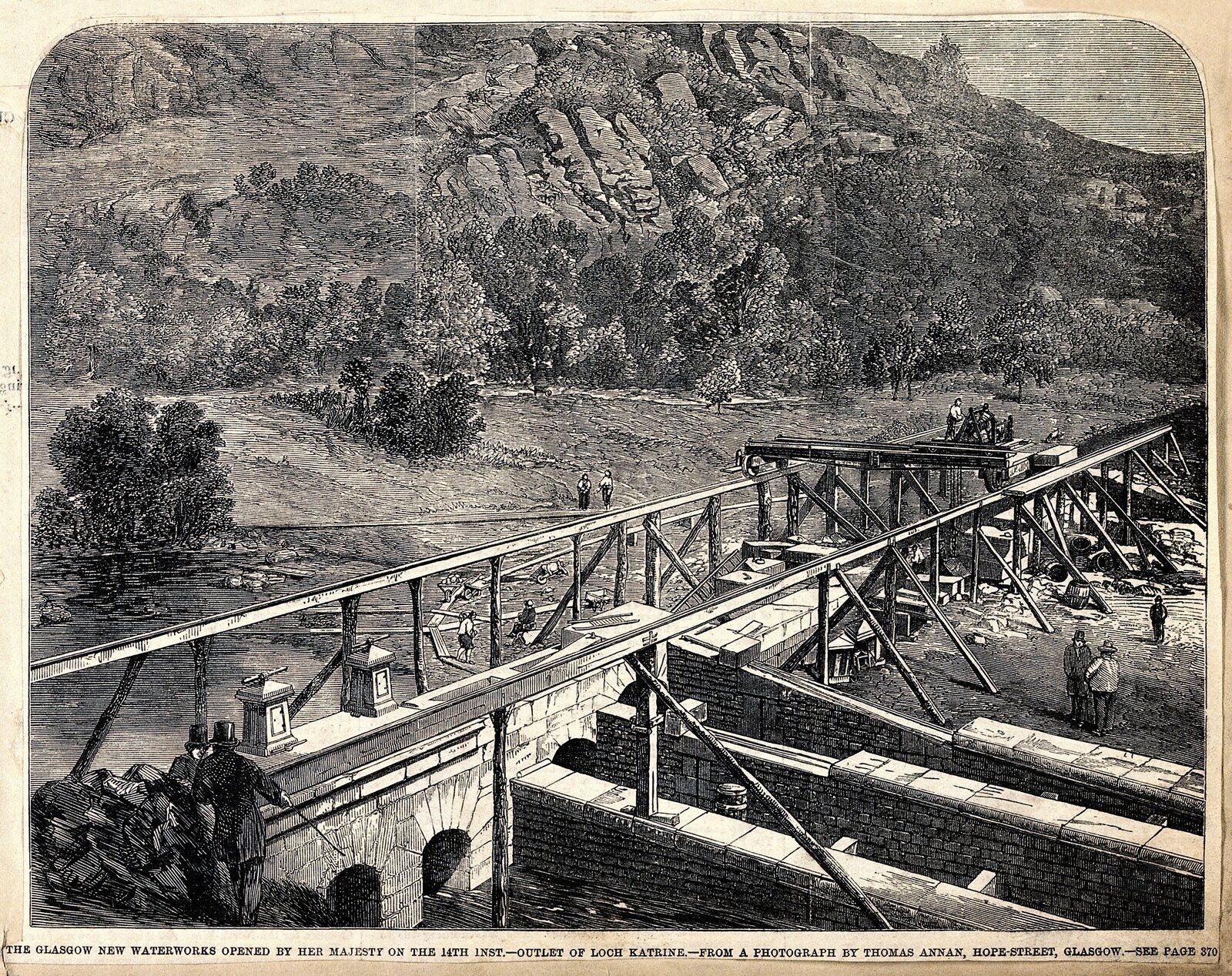
Glasgow new waterworks, Loch Katrine. Wood engraving after a photograph by Thomas Annan. Wellcome Collection, CC BY 4.0.
-
S.S. Rob Roy II
“Rob Roy II was commissioned in 1855, again at Denny's, for the cost of £2,350, but this time on behalf of the newly formed Loch Katrine Steamboat Company. Launched in 1856 and was in service for 44 years until 1900 under the stewardship of Captain J. Munro.” ... “Queen Victoria and Prince Albert sailed on Rob Roy II in October 1859 to the major new waterworks on the lochside, which supply millions of gallons of fresh water to Glasgow daily. Nearly a decade later, in September 1869, Queen Victoria visited Loch Katrine twice more, sailing again on Rob Roy II. This led to her writing in her diaries about how she was captivated by seeing the locations described in ‘The Lady of Lake’.” ... “After a short overlap during the 1900 season, S.S. Sir Walter Scott replaced S.S. Rob Roy II, which went into semi-retirement, occasionally carrying cargo until 1911, when she was broken up and sold.” (lochkatrine.com)
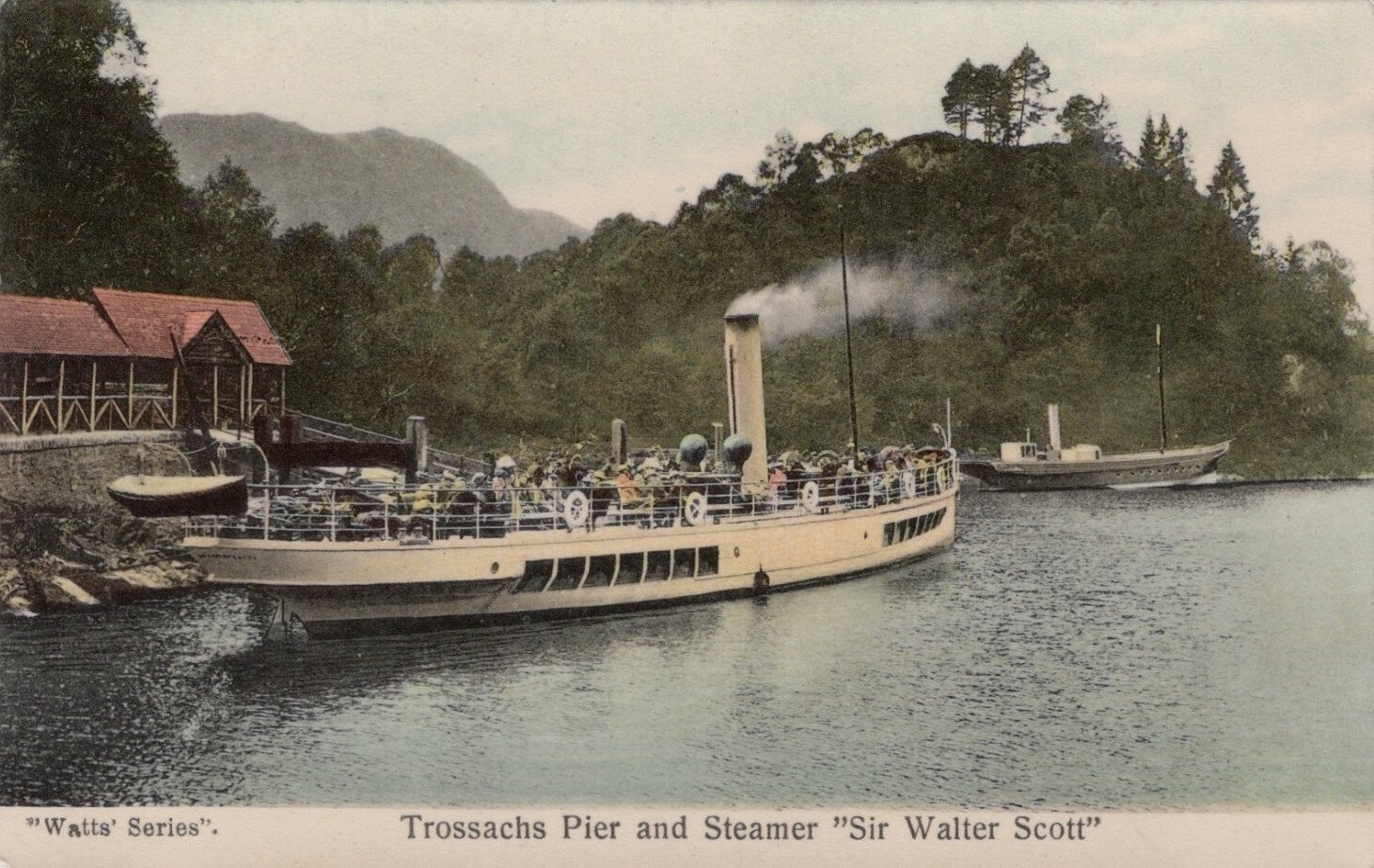
Trossachs Pier with the new S.S. Sir Walter Scott in the foreground and the retiring S.S. Rob Roy II steaming away in the background, during the brief 1900 overlap. Tinted postcard, Watts' Series, c.1900-1905. Public domain by age.
-
Glengyle sold
Glengyle was sold for £9,000 to the proprietor of the Queen's Hotel in Glasgow - also a MacGregor, though not of the Glengyle line. An earlier attempt to sell the estate by public roup, advertised for 18 February 1857, had been withdrawn on 24 December 1856; the eventual sale was reported in the Glasgow Herald of 7 June 1860 as already done. The price came up at a Water Commission meeting because John MacGregor of Glengyle had been litigating with the commission over fourteen acres compulsorily taken for the new Loch Katrine aqueduct: he had valued those fourteen acres at the same figure he then accepted for the entire estate.
“Sale of Glengyle Estate. The Clerk here mentioned that he had learned that M'Gregor of Glengyle had sold his estate to the proprietor of the Queen's Hotel - also a M'Gregor. Mr. Stewart stated that Glengyle had got £9000 for the whole estate, being one-tenth of the value he put upon fourteen acres of it when litigating with the Water Commission.”
- Glasgow Herald, 7 June 1860.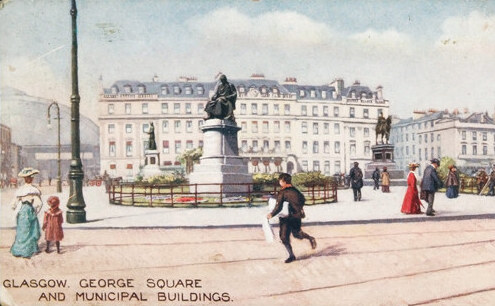
George Square, Glasgow, on a c.1898 postcard. The Queen's Hotel - whose proprietor bought Glengyle in 1860 - occupied the large block on the north side of the square (left of centre); it was renamed the North British Station Hotel in 1903. Detail of a Tuck's Oilette panorama card. Public domain by age.
-
11th chieftain
James MacGregor, 11th chieftain of Clan Dougal Ciar. Born on the 1st of August 1818 & died on the 26th of January 1897.
Note that period of chieftainship is estimated.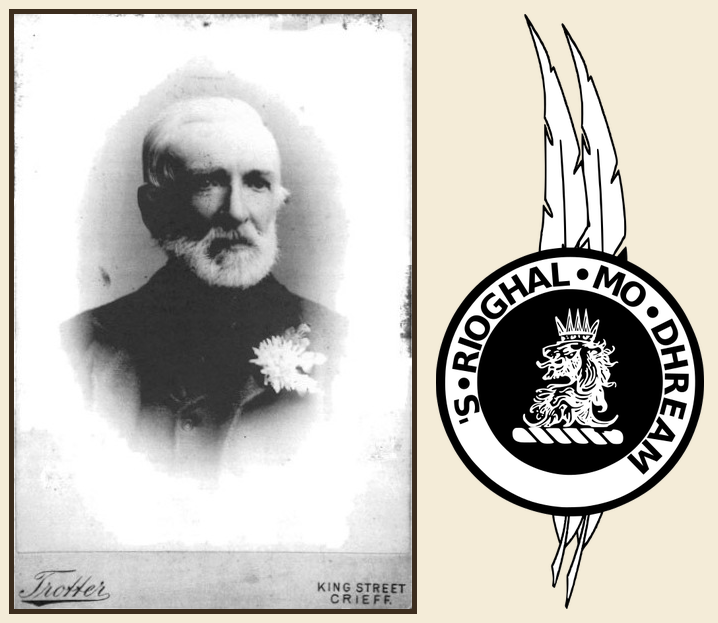
James MacGregor, 11th chieftain of Clan Dougal Ciar. Photograph by Trotter in Crieff. Chieftain's badge adapted from Celtus, via Wikimedia, CC BY-SA 3.0.
-
2nd Aqueduct construction
An additional aqueduct was constructed along with a 2nd raising of the loch to increase the water supply. Dam was made taller raising the water level by 5 feet (1.5m).
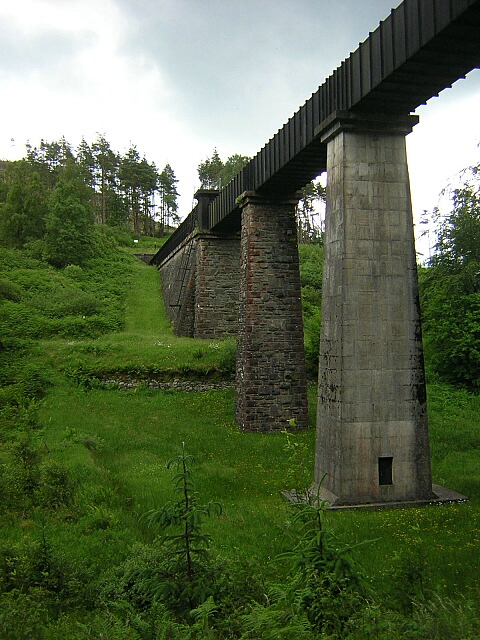
Aqueduct viaduct in Loch Ard Forest, on the route of the Loch Katrine to Glasgow water supply. Photo by Iain Thompson via Wikimedia, CC BY-SA 2.0.
-
Obit. (Perthshire Advertiser)
Obituary of James MacGregor, 11th chieftain of Clan Dougal Ciar, published the day after his death.
“Death of a Highland Chieftain. The Last of a Noble Line. James Macgregor, a Highland chieftain, who latterly lived in very poor circumstances, died yesterday near Auchterarder. Deceased, who was born on 1st August, 1818, was the last descendant of Gregor Ghlun Dhu (Black Knee), who in 1745 received a commission from Prince Charles as colonel in the army and commander of the fortresses of Doune, Cardross, and Ballanton, all in Menteith, and had obtained from James, fourth Marquis of Montrose, a feu charter of the lands of Glengyle at the west end of Loch Katrine. James MacGregor was the eldest son of the late John MacGregor of Glengyle, and the head of the ‘Clan du'i Chiar,’ one of the principal houses of the Clan Gregor, being twelfth in descent from Dougal Ciar, the ancestor of his line. He sold the property of Glengyle in 1860 to the late Mr James Macgregor, formerly of the Queen's Hotel, Glasgow, brother of Mr Donald Macgregor, of the Royal Hotel, Edinburgh. The late Glengyle was unmarried, and is succeeded in the representation of the house of Dougal Ciar by Mr Norman Macgregor, brother of the late Sir Charles Metcalfe Macgregor, K.C.B., descended in direct line from Robert Macgregor of Inversnaid, the celebrated Rob Roy, uncle of ‘Ghlun dhu.’ As no near relations survive, arrangements have been made by several of the clan, headed by Sir Malcolm Macgregor of Macgregor, for the conveyance of the remains of the late chieftain to the family burying-ground at Glengyle House on Loch Katrine, where he will be laid to rest beside his forefathers. Mr H. W. H. Dunsmure, of Brenachoile Lodge, kindly gives the use of his steam yacht to convey the remains from Stronachlachar Pier to Glengyle.”
- Perthshire Advertiser, 27 January 1897. -
12th chieftain
Norman MacGregor, 12th chieftain of Clan Dougal Ciar. Born on the 30th December 1842 & died on the 11th of April 1938.
Note that period of chieftainship is estimated.
Adapted from badges by Celtus, via Wikimedia, CC BY-SA 3.0.
-
S.S. Sir Walter Scott
The steamship arrived at Loch Katrine (having been dismantled and transported by road, as there is no railway access to the loch) and began her maiden voyage.
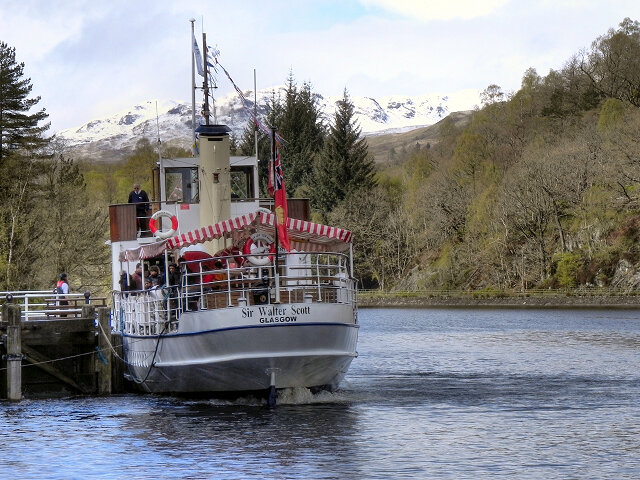
S.S. Sir Walter Scott on Loch Katrine. Photo by David Dixon, CC BY-SA 2.0.
-
Loch Arklet System built
Additional water source feeding Loch Katrine. Dam and tunnel connecting Loch Arklet to Loch Katrine. Located between Loch Katrine and Loch Lomond.
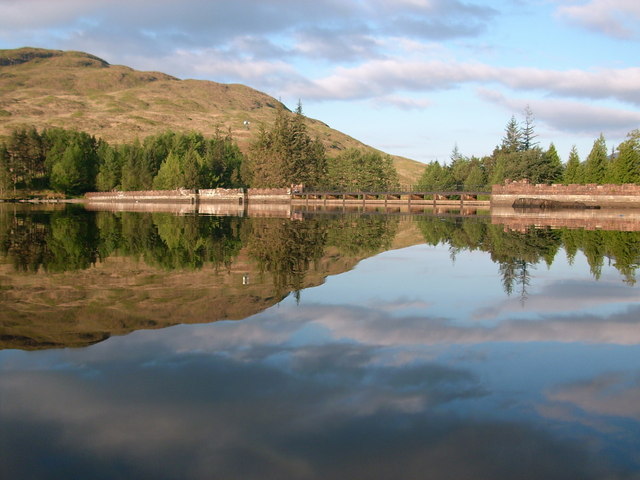
Loch Arklet dam. Photo by Dreamer, CC BY-SA 2.0.
-
Rob Roy (United Films)
A three-reel silent film, the first feature-length film made in Scotland. Directed by Arthur Vivian for the newly formed Glasgow company United Films, with the actor-manager John Clyde in the title role, Theo Henries as Helen MacGregor and Durward Lely as Francis Osbaldistone. Shot at the Clachan of Aberfoyle and at United Films' studio at Rouken Glen, Glasgow. No print is known to survive. See Making Movies in Strathard at Strathard Heritage Network.
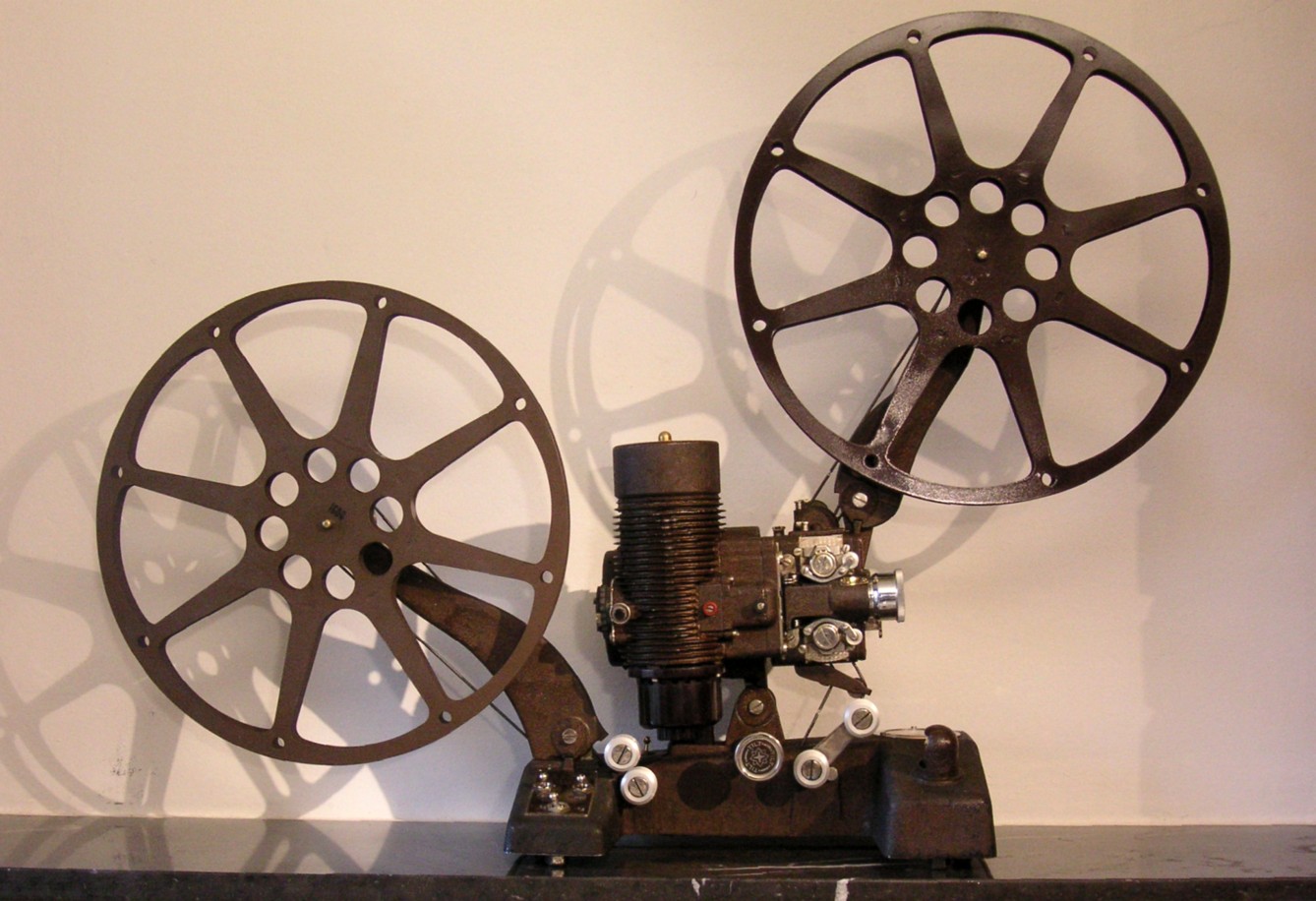
Bell & Howell Filmo 129 silent film projector. Photo by Holger.Ellgaard, 2007, CC BY-SA 3.0.
-
An Adventure of Rob Roy (American Gaumont)
A single-reel American adaptation released by the Gaumont Company on 9 November 1911, advertised as shot in “MacGregor's Country” though produced on US sets. See Making Movies in Strathard at Strathard Heritage Network.
Bell & Howell Filmo 129 silent film projector. Photo by Holger.Ellgaard, 2007, CC BY-SA 3.0.
-
Rob Roy (Eclair)
A 30-minute silent two-reeler from the American Eclair Company, directed by Oscar Lund, with Jack Johnston as Rob Roy and Robert Frazer and Nancy Avril in support. Despite the Highland subject, it was shot at Eclair's studios in Fort Lee, New Jersey. See Making Movies in Strathard at Strathard Heritage Network.
Bell & Howell Filmo 129 silent film projector. Photo by Holger.Ellgaard, 2007, CC BY-SA 3.0.
-
World War I
The First World War took a heavy toll on the Highlands. Scotland enlisted at one of the highest per-capita rates in the British Empire, and the Highland regiments bore much of the casualty list - the Argyll and Sutherland Highlanders, the Black Watch, the Camerons, the Seaforths, the Gordons, the Cameronians and others. The Argylls alone took in some 26,000 men over the course of the war and lost around 7,000 of them. The recruiting district that covered the Trossachs and the head of Loch Katrine fell to the Argylls; small villages like Balquhidder and Aberfoyle each have a war memorial that records the rural drain of young men into the Highland battalions.
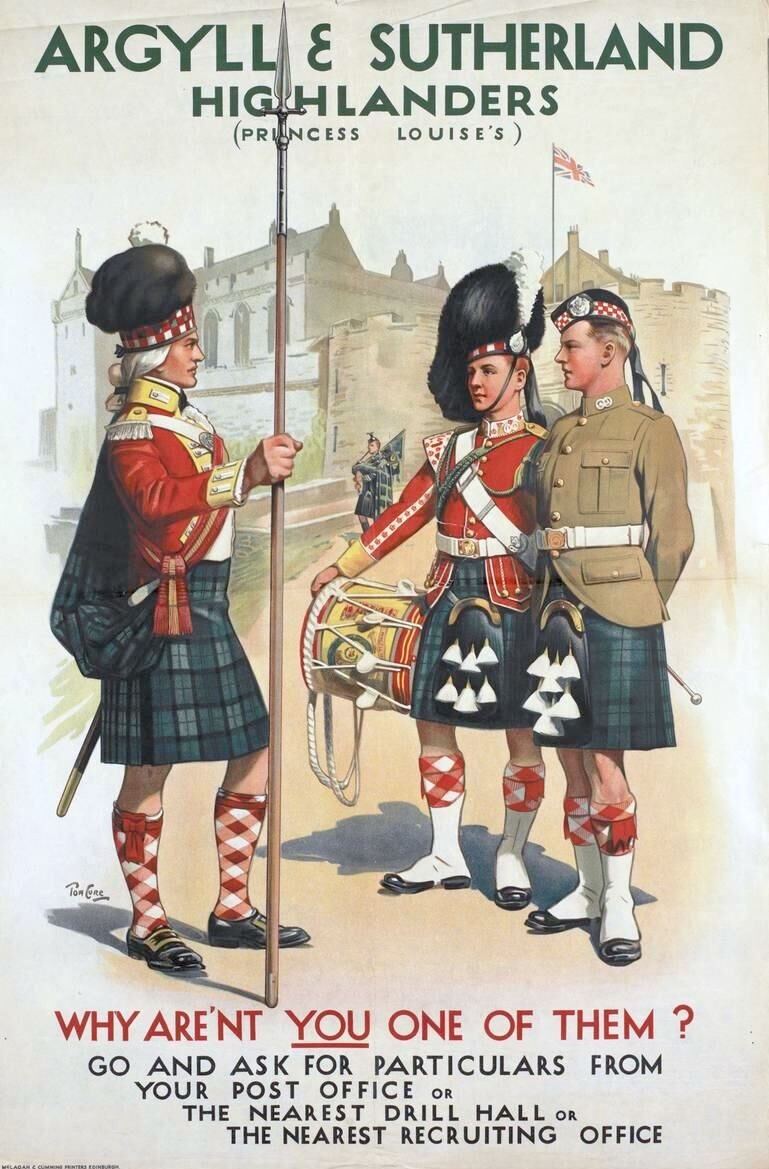
Recruiting poster for the Argyll and Sutherland Highlanders (Princess Louise's), Tom Curr, 1914. Imperial War Museums (Art.IWM PST 12148), public domain.
-
Glengyle bought by Glasgow Corporation
The Glengyle estate was purchased by Glasgow Corporation in 1918. See the Historic Environment Scotland listing for the MacGregor of Glengyle burial ground.
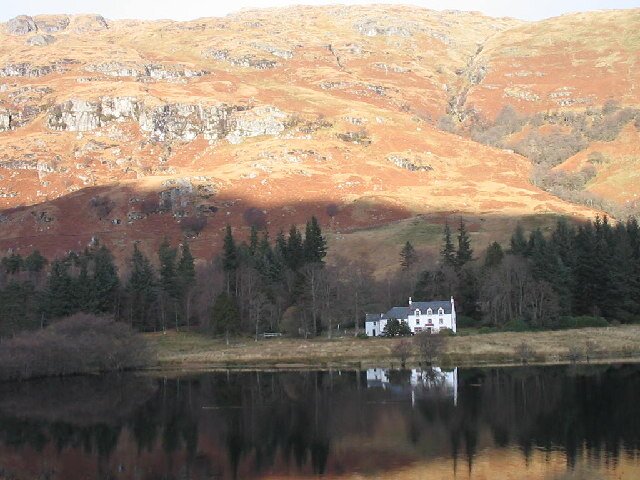
Glengyle House at the head of Loch Katrine, on the estate bought by Glasgow Corporation in 1918. Photo by Ian Mitchell, November 2004, via Wikimedia, CC BY-SA 2.0.
-
3rd raising of the loch
Dam made taller again raising the water level by another 5 feet (1.5m).
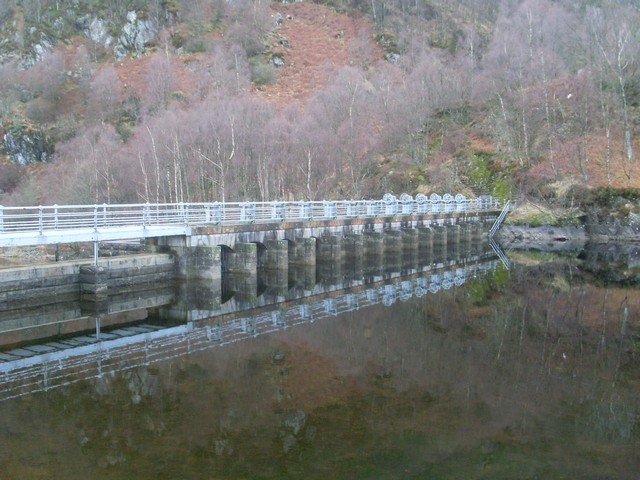
The Loch Katrine dam viewed from the east. The current structure is the cumulative result of all three raisings (1859, 1885-96, 1919-29). Photo by Stephen Sweeney via Wikimedia, CC BY-SA 2.0.
-
Rob Roy (silent film)
Rob Roy is a 1922 British silent film directed by W. P. Kellino, starring David Hawthorne as Rob Roy. It was shot on location in the Trossachs and at Stirling Castle, with the 10th Duke of Argyll giving permission to film on his estates. When it premiered in Glasgow the city came to a near-standstill: the Royal Scots Fusiliers marched down from Maryhill Barracks with their band, and wounded servicemen from local military hospitals were brought to the cinema.
The full film can also be watched, watermark-free, at BFI Replay.
Rob Roy (1922), directed by W. P. Kellino. Public domain by date of publication.
-
World War II
The Second World War took the Highland regiments through the major theatres of the war. The 51st Highland Division - drawn from the Argyll and Sutherland Highlanders, the Black Watch, the Seaforth, Cameron and Gordon Highlanders - was forced to surrender at Saint-Valery-en-Caux in June 1940 with most of its men taken prisoner; a reformed 51st then fought through North Africa, Sicily, Normandy and into Germany. The Highland Light Infantry, raised in Glasgow, served with the British Expeditionary Force in 1940, in the Western Desert and Italy, and through the North-West Europe campaign.
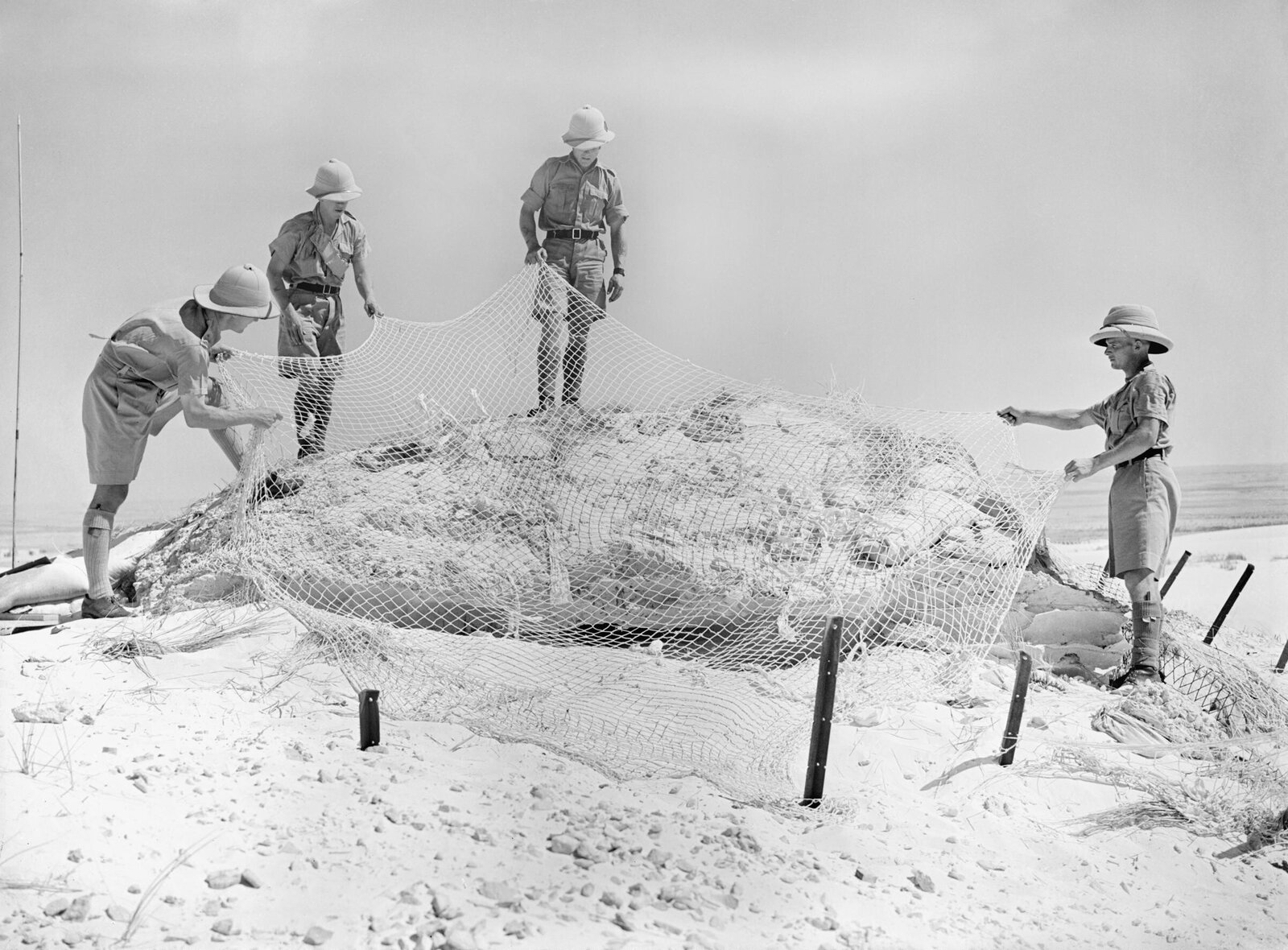
Men of the Highland Light Infantry (City of Glasgow Regiment) camouflaging a gun position at Mersa Matruh, Egypt, 28 May 1940. Imperial War Museums (E 90), public domain.
-
Rob Roy: The Highland Rogue (film)
A Walt Disney / RKO production directed by Harold French and starring Richard Todd as Rob Roy, filmed largely on location in and around Kinlochard, Aberfoyle and Brig o' Turk in the Trossachs. The extras were soldiers of the Argyll and Sutherland Highlanders, just back from the Korean War. The film premiered at the Royal Command Performance Film Gala at the Odeon Leicester Square on 26 October 1953.
For a local account of the filming, with photographs of villagers who acted as extras, see A narrative account of the film Rob Roy: The Highland Rogue and the Rob Roy The Highland Rogue (1953) Exhibition from 2003 at Strathard Heritage Network.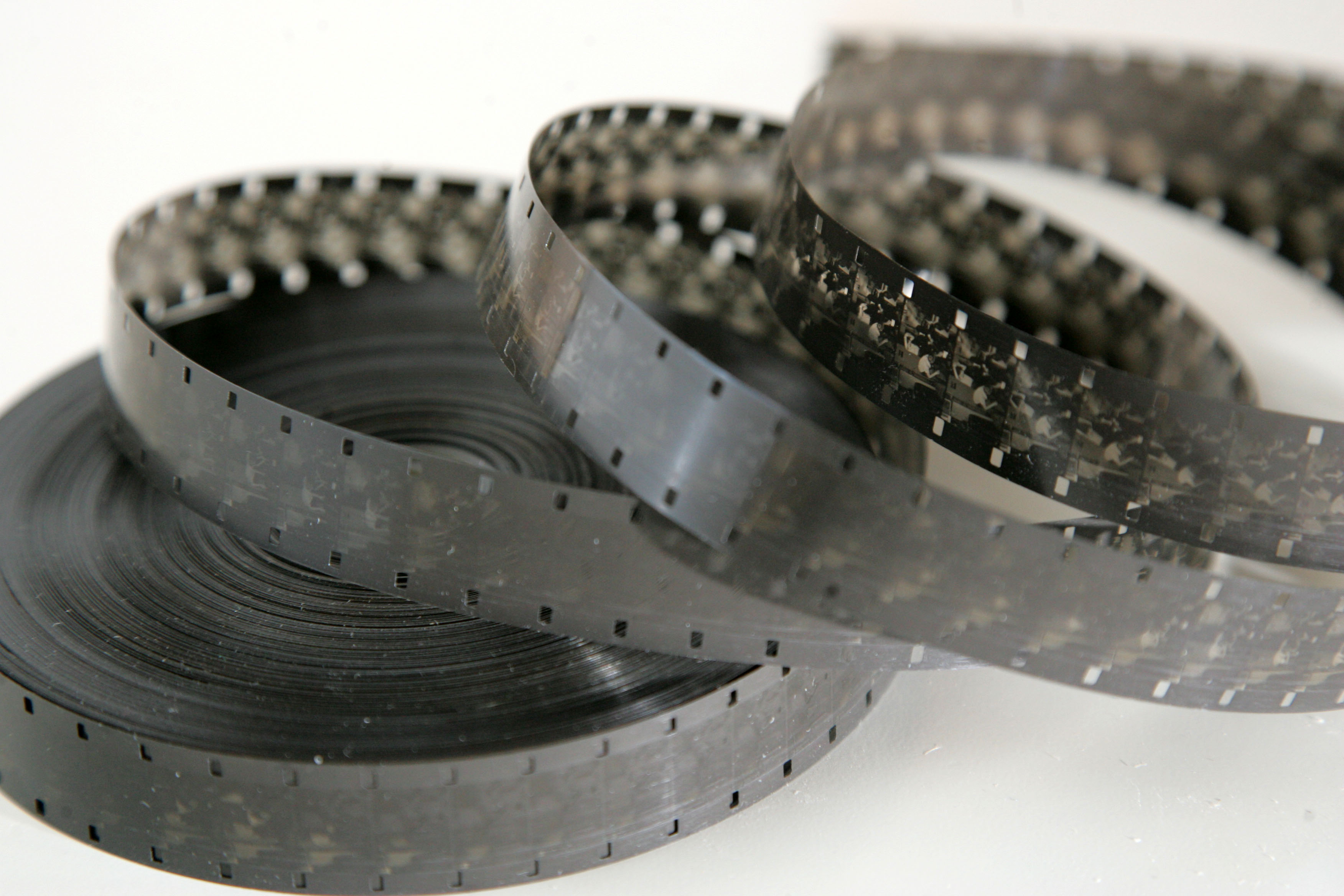
Coiled length of black-and-white reversal film. Photo by Runner1616, 2012, CC BY-SA 3.0.
-
MacGregor's Gathering (novel)
Nigel Tranter's MacGregor's Gathering (Hodder & Stoughton), the first volume of his MacGregor Trilogy. The novel opens the heroic-romance treatment of Rob Roy MacGregor's struggle to ensure the survival of his clan in the early 18th century - a popular counterpart to Walter Scott's earlier Rob Roy in the long literary afterlife of the proscription years.
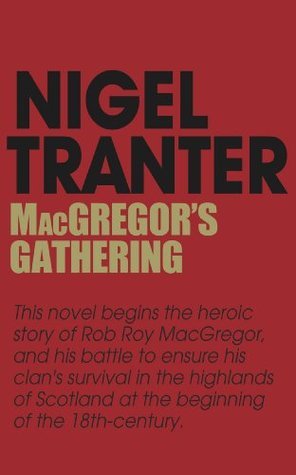
Cover of Nigel Tranter, MacGregor's Gathering (Hodder & Stoughton, 1957; later Coronet paperback edition shown).
-
Glen Finglas System built
Additional water source feeding Loch Katrine. Tunnel completed 1958 (initially from River Turk). Reservoir dam completed 1965. Located north of Brig o' Turk, near Callander.
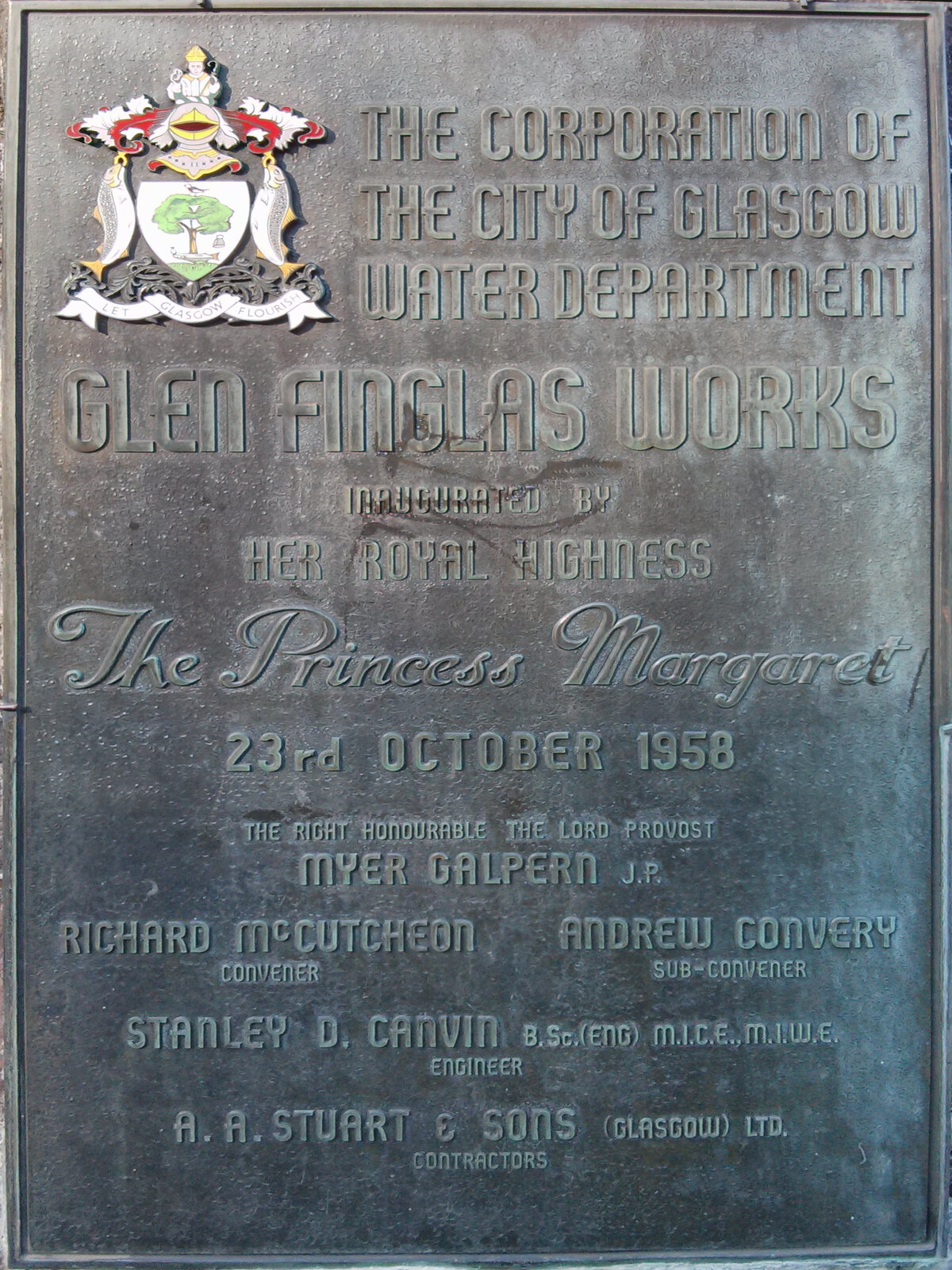
Glen Finglas works. Photo by Victuallers, CC BY-SA
-
The Clansman (novel)
The Clansman (Hodder & Stoughton), the second volume of Nigel Tranter's MacGregor Trilogy. The story carries Rob Roy and the MacGregors into the 1715 Jacobite rising and its aftermath.
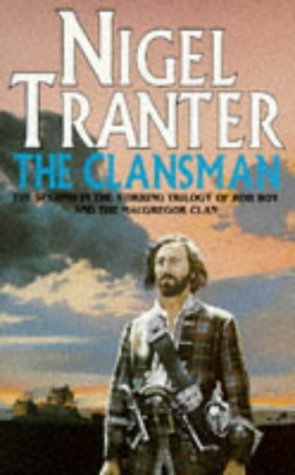
Cover of Nigel Tranter, The Clansman (Hodder & Stoughton, 1959; later Coronet paperback edition shown).
-
Rob Roy (BBC TV serial)
A BBC television serial in seven black-and-white parts, with Tom Fleming as Rob Roy and Samantha Eggar as Diana Vernon. See Making Movies in Strathard at Strathard Heritage Network.

Mini Star 416 portable black-and-white television. Photo by Raimond Spekking, CC BY-SA 4.0.
-
Gold for Prince Charlie (novel)
Gold for Prince Charlie (Hodder & Stoughton), the third and final volume of Nigel Tranter's MacGregor Trilogy. Set around the 1745-46 rising and its collapse, it follows Duncan MacGregor - great-nephew of Rob Roy - through the escort of Prince Charles Edward to safety and the desperate effort to recover the French gold landed too late at Loch nan Uamh.
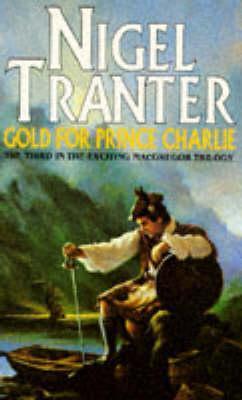
Cover of Nigel Tranter, Gold for Prince Charlie (Hodder & Stoughton, 1962; later Coronet paperback edition shown).
-
Rob Roy (BBC Scotland)
A six-part BBC Scotland television drama dramatised by Tom Wright, with Andrew Faulds in the title role, filmed around the Lake of Menteith. See Making Movies in Strathard at Strathard Heritage Network.
Mini Star 416 portable black-and-white television. Photo by Raimond Spekking, CC BY-SA 4.0.
-
Rob Roy MacGregor (biography)
W. H. Murray's Rob Roy MacGregor: His Life and Times (Canongate). The Scottish mountaineer and writer worked from the historical record to separate the man from Walter Scott's legend, and his biography is often named as a source behind the 1995 film.
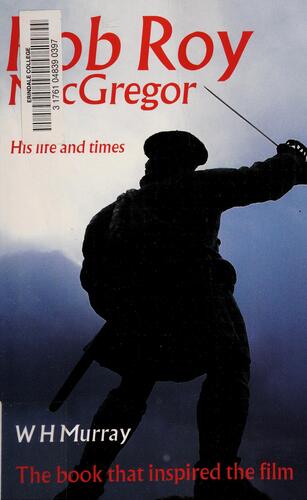
Cover of W. H. Murray, Rob Roy MacGregor: His Life and Times (Canongate, 1995 edition), carrying the line “The book that inspired the film”.
-
Clan Gregor Centre, Edinburgh
The Clan Gregor Centre at 44 St Patrick Square, Edinburgh, was an independent Scottish educational charity with a small museum, a shop and a genealogical research collection. The Centre's charter is dated 1983, its surviving museum and shop photographs run to 1992, and it was still publishing into the mid-1990s. Its research papers, family trees and publications were later deposited with the National Library of Scotland, where they form the Clan Gregor Centre Archive (Acc.13527 and earlier accessions).
See the Clan Gregor Centre Archive at the National Library of Scotland. -
The Quaich (Centre journal)
The Clan Gregor Centre published its research journal, The Quaich, in twenty parts between 1989 and 1996. A run is held with the Centre's papers in the Clan Gregor Centre Archive at the National Library of Scotland.
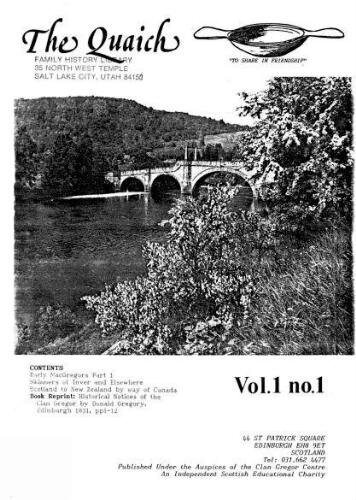
Cover of The Quaich, Vol. 1 No. 1, published under the auspices of the Clan Gregor Centre, 44 St Patrick Square, Edinburgh. Carrying the motto “To share in friendship”.
-
The Clearances (poetry)
T. S. Law's collection The Clearances, published by Fingerpost Publicatiouns of Blackford. Law was a Scots-language poet whose subjects were working-class culture, the political condition of Scotland and a wider imperative for freedom; the collection sets the Highland Clearances in that frame.
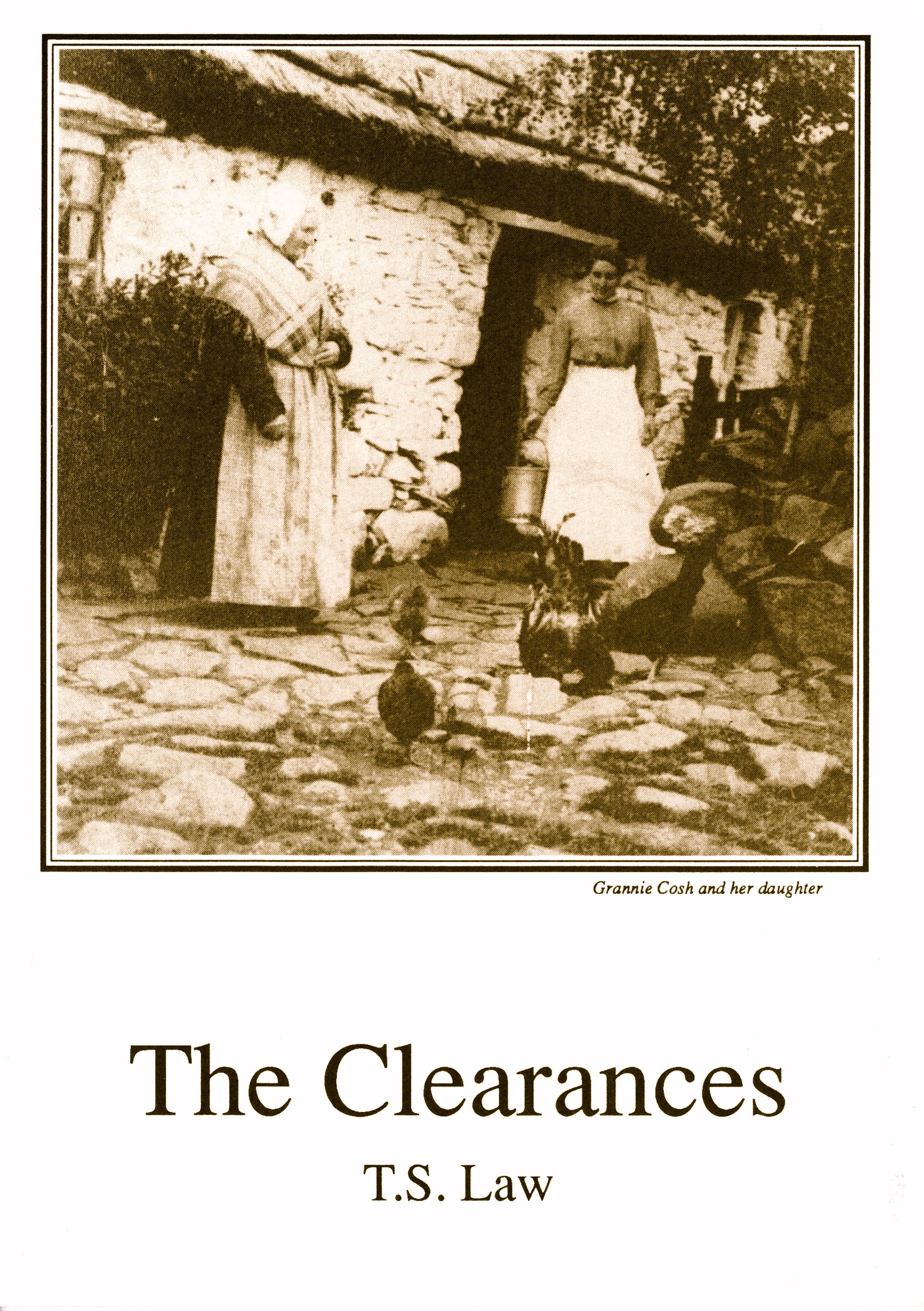
Cover of T. S. Law, The Clearances (Fingerpost Publicatiouns, 1992). The cover photograph, captioned “Grannie Cosh and her daughter”, shows a Highland croft scene.
-
Rob Roy (film)
Rob Roy is a 1995 historical drama set in early 18th-century Scotland. It follows Rob Roy MacGregor, a Highland clan chief who borrows money from a nobleman to help his community, only to be betrayed when the funds are stolen. The film depicts his struggle to protect his family and honor against a corrupt aristocrat and his ruthless henchman, blending themes of integrity, revenge, and survival against the backdrop of the Scottish Highlands. Liam Neeson stars as Rob Roy, with Tim Roth delivering an acclaimed performance as the villainous Archibald Cunningham.

VHS videocassette, the dominant home-video format of the 1990s. Photo by LoMit, 2020, CC BY-SA 4.0.
-
Sons of the Wolf
Ronald Williams' Sons of the Wolf: Campbells and MacGregors and the Cleansing of the Inland Glens (Birlinn). A short, focused account of the long feud between Clan Campbell and Clan Gregor and the systematic harrying that drove the MacGregors from their ancestral glens - the violent backdrop to the proscription years that frame much of this archive.
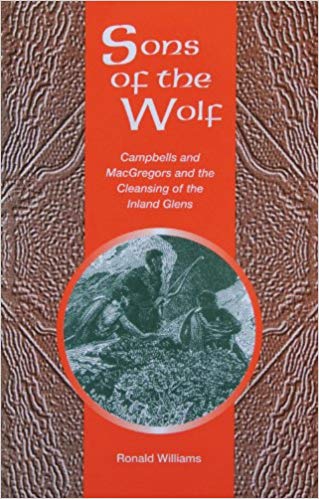
Cover of Ronald Williams, Sons of the Wolf: Campbells and MacGregors and the Cleansing of the Inland Glens (Edinburgh: Birlinn, 1998).
-
The Hunt for Rob Roy
David Stevenson's The Hunt for Rob Roy: The Man and the Myths (John Donald). Stevenson, Professor Emeritus of Scottish History at St Andrews, strips away the romance built up by tradition, Scott and Hollywood: an outlawry that followed a scheme to cheat his creditors, the intelligence he passed to the government against men he had backed, and a fighting reputation resting on a single duel, which he lost.
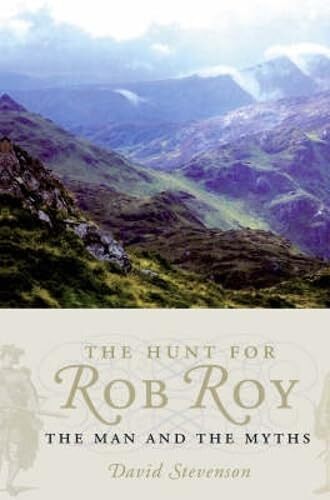
Cover of David Stevenson, The Hunt for Rob Roy: The Man and the Myths (Edinburgh: John Donald, 2004).
-
MacGregor (novel)
Peter Lawrie's historical novel MacGregor, set during the 1745 Rising. Lawrie is the genealogist behind the Clan Gregor research published at Glen Discovery, on which much of the genealogy section of this archive draws.
Available at Smashwords.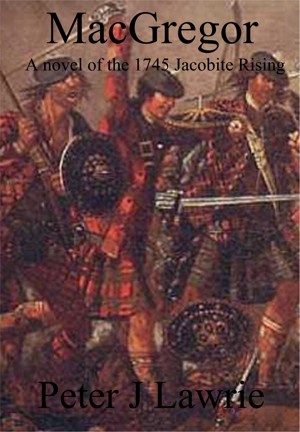
Cover of Peter Lawrie, MacGregor (2013). Image courtesy of the author via Smashwords.
-
History of the MacGregors
Peter Lawrie's History of the MacGregors, covering the clan from its origins to the last Jacobite Rising of 1745. A companion in non-fiction to his earlier novel, and drawing on the same long programme of research that underpins his Clan Gregor pages at Glen Discovery.
Available at Smashwords.
Cover of Peter Lawrie, History of the MacGregors (2019). Image courtesy of the author via Smashwords.
-
Who Was Rob Roy?
Separating the historical Rob Roy MacGregor from the Walter Scott legend.

“Who Was the Real Rob Roy MacGregor?” by Scotland History Tours, 29 December 2020.
-
Forbidden Clan
A Scotland History Tours video on the 1603 Battle of Glen Fruin and the proscription of the MacGregor name that followed - the long century of outlawry that frames much of this archive.

“CLAN MacGREGOR's FALL: Scottish Clan History and the Battle of Glen Fruin” by Scotland History Tours, 27 February 2021.
-
The Great Kilt
Fandabi Dozi on the féileadh mòr, the single length of woollen cloth that served the Highlander as belted garment by day and bedding or shelter by night.

The Great Kilt -ULTIMATE SURVIVAL BLANKET? - Outdoor Clothing & Shelter in ONE Multifunctional Cloth
-
Sir Walter Scott & Kilts
Scotland History Tours on how Walter Scott's writings and his stage-management of George IV's 1822 visit to Edinburgh revived Highland dress as a symbol of national identity, only forty years after the Dress Act ban was repealed.

“Sir Walter Scott Made us Wear Kilts in Scotland” by Scotland History Tours, 11 May 2021.
-
“The Penicuik Drawings” Brought to Life
Fandabi Dozi recreates the dress, kit and bearing of Jacobite Highlanders from the Penicuik Drawings, a set of eyewitness sketches of the forces that passed through Penicuik, near Edinburgh, during the 1745-46 rising.
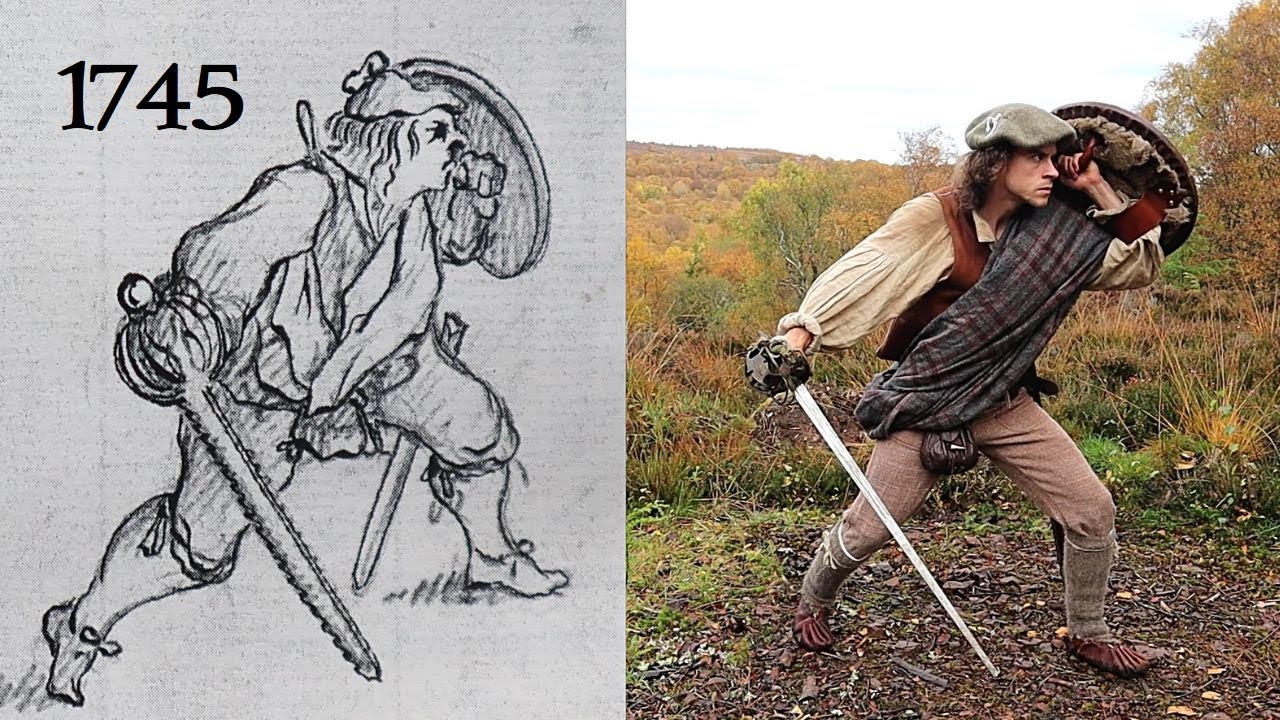
Resurrecting 300 Year Old Highland Warriors- “The Penicuik Drawings” Brought to Life
-
Life of Highland Women
An interview with Marion Smart, drawing on the Highland Folk Museum, on the daily work and self-reliance skills of Highland women in the 17th and 18th centuries.

Life of Highland Women - 17th & 18th Century
-
Highland Women's Great Kilt
On the earasaid, the woman's counterpart to the féileadh mòr, and the wider 18th-century wardrobe of arisaid, gown, plaid and head linen worn by Highland women.

The Earasaid - Highland Women's Great Kilt & Other 18th Century Clothing
-
Cattle Raiding History
A documentary film on the Highland tradition of the creach, retracing the routes, kit and tactics of the cattle reivers who shaped clan economy and feud well into the 18th century.

HIGHLAND WARRIOR CHALLENGE - Scottish Cattle Raiding History - Documentary Film
-
Scotland's Identity Crisis: The Root Cause
A Scotland History Tours essay on the long shadow cast by the Highland-Lowland divide, Jacobite defeat and the post-Culloden suppression on modern Scottish identity.

“Scotland's Identity Crisis: The Root Cause” by Scotland History Tours, 21 June 2025.